
TL;DR:
- Premium dog food is mainly a marketing term with no regulatory standard, but the AAFCO statement confirms nutritional adequacy. Most premium brands rely on formulation rather than feeding trials, making their “premium” label more marketing than science. For most healthy adult dogs, mid-range food provides 90 to 95 percent of the nutrition at nearly half the cost, with higher quality ingredients benefiting dogs with specific needs.
Premium dog food is defined as pet nutrition marketed with superior ingredients and higher quality standards, but the term carries no formal regulatory definition in the United States. That gap matters more than most dog owners realize. The AAFCO (Association of American Feed Control Officials) sets minimum nutrient profiles that all complete dog foods must meet, whether they cost $2 a day or $6 a day. So is premium dog food worth it? For most healthy adult dogs, the answer is nuanced: the nutritional gap between premium and mid-range options is smaller than the price gap suggests, but certain dogs genuinely benefit from higher-quality formulations.
Is premium dog food worth it? What the labels actually mean
The word “premium” on a dog food bag is a marketing label without regulatory definition, not a nutritional guarantee. Any brand can print it on a bag without meeting a higher standard. What actually matters is the AAFCO nutritional adequacy statement, which you will find in small print near the ingredient panel.
That statement tells you two things: whether the food is complete and balanced, and how the brand proved it. There are two methods of substantiation. Formulation-based means the recipe was calculated to meet AAFCO nutrient profiles on paper. Feeding trial substantiation means real dogs ate the food and were monitored for health outcomes. Feeding trial evidence is stronger proof of nutritional adequacy, and AAFCO requires a minimum 26-week trial for adult maintenance diets.
Most premium brands use formulation-based substantiation, not feeding trials. That is not automatically a red flag, but it does mean the “premium” label is doing more marketing work than scientific work. Veterinarians consistently point to the AAFCO adequacy statement as the most important factor when evaluating any dog food, premium or otherwise.
- Look for “complete and balanced” on the label, not just “natural” or “premium.”
- Check whether the statement says “formulated to meet” or “animal feeding tests using AAFCO procedures.”
- The life stage listed (adult maintenance, all life stages, growth) must match your dog’s current needs.
Pro Tip: You can contact a brand directly and ask for their feeding trial protocol and outcome summary. Reputable companies share this documentation upon request. If a brand refuses or cannot provide it, treat that as useful information.
How does premium dog food compare nutritionally and cost-wise?
The nutritional difference between premium and mid-range dog food is real but smaller than the price difference. Mid-range dog food at about $2.80 per day delivers 90–95% of the nutritional value of premium options costing $5.50 per day. That difference translates to roughly $986 in annual savings for a healthy adult dog. For most families, that is a meaningful number.

The ingredient story gets more complicated when you look at protein sources. A premium food may list 38% crude protein, but a portion of that can come from plant-based ingredients like lentils. A mid-range food with 34% crude protein sourced mostly from animal proteins may actually deliver more usable nutrition per gram. Legumes raise crude protein percentages without proportionally increasing biological value for dogs. This is the diminishing returns problem that shows up above the $3.50 per day price point.
| Factor | Mid-range food | Premium food |
|---|---|---|
| Daily cost | ~$2.80 | ~$5.50 |
| Nutritional value | 90–95% of premium | Baseline |
| Annual cost | ~$1,022 | ~$2,008 |
| Protein source | Mostly animal-based | Often includes legumes |
| AAFCO compliance | Required | Required |
The table above shows that the cost gap is not matched by an equivalent nutrition gap. That said, premium foods often invest in higher quality supply chain processes and ingredient sourcing, which can benefit certain dogs even when the macronutrient numbers look similar.
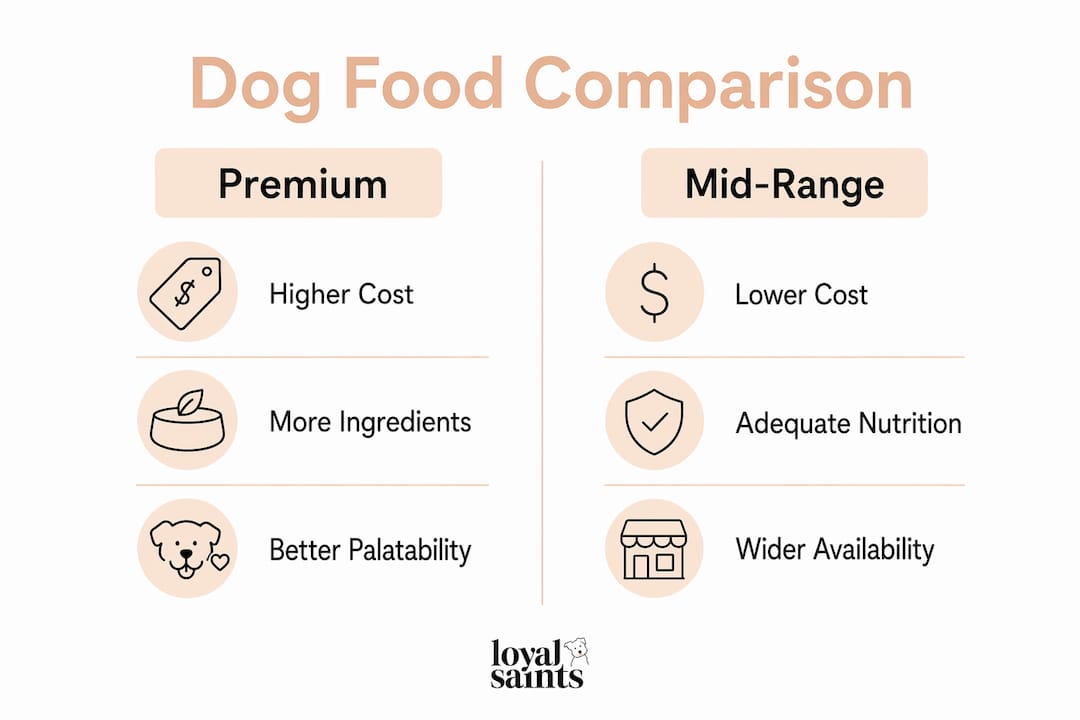
Understanding the nutritional differences between premium and regular options helps you spend your money where it actually counts for your specific dog.
When does premium dog food offer real benefits?
Premium food delivers the clearest value for dogs with specific needs. Working dogs, sporting breeds, and highly active dogs need higher protein and fat levels to support muscle repair and sustained energy. A well-formulated premium diet built on animal proteins can meet those demands more efficiently than a budget option. The same logic applies to puppies and pregnant or nursing dogs, where life stage nutrition is non-negotiable.
Palatability is another area where premium foods often outperform. Dogs with sensitive stomachs or picky eating habits frequently do better on foods with fewer fillers and cleaner ingredient lists. If your dog regularly skips meals or shows digestive upset on standard kibble, a higher-quality formulation may reduce those problems. This is one area where the extra cost can pay off in reduced vet visits and better daily comfort for your dog.
The picture flips for dogs with medical conditions. Dogs with diabetes, kidney disease, or pancreatitis often require prescription diets, and premium commercial food can actually worsen those conditions. No premium label replaces a veterinary prescription diet when one is medically indicated. Always consult your vet before switching a dog with a diagnosed condition to any new food, premium or otherwise.
For healthy, sedentary adult dogs with no known sensitivities, premium food offers limited additional benefit over a quality mid-range option that carries a valid AAFCO statement. The veterinary-recommended approach focuses on life stage appropriateness, digestibility, and ingredient transparency rather than price tier.
- Active and working dogs: Benefit most from premium animal protein and higher fat content.
- Picky eaters and sensitive stomachs: Often respond well to cleaner ingredient lists.
- Healthy adult dogs with low activity: Mid-range diets typically meet all nutritional needs.
- Dogs with medical conditions: Require vet-prescribed diets, not premium commercial options.
Pro Tip: Track your dog’s weight, coat condition, stool quality, and energy level for 8 weeks after any diet change. These four markers tell you more about food suitability than any marketing claim on the bag.
How to evaluate whether expensive dog food is right for your dog
Start with the AAFCO statement, not the front of the bag. The front label sells you a story. The back panel gives you facts. Look for “animal feeding tests using AAFCO procedures” rather than “formulated to meet,” since feeding trial substantiation provides stronger evidence that real dogs thrived on the diet.
Check the first three ingredients. Animal proteins (chicken, beef, salmon) should lead the list. If you see potatoes, tapioca, or peas in the top five, pay attention. High potato content has been linked to dilated cardiomyopathy risk in certain breeds, particularly large breeds and those genetically predisposed to heart issues. This is one case where a premium price tag does not guarantee safety.
Use this checklist when comparing options:
- Confirm the AAFCO nutritional adequacy statement matches your dog’s life stage.
- Identify the first protein source and verify it is animal-based.
- Check for high potato, tapioca, or legume content if your dog is a breed at risk for heart issues.
- Compare the daily feeding cost, not just the bag price.
- Ask the brand for feeding trial documentation if the label says “formulated to meet.”
- Consult your vet if your dog has any diagnosed health condition before switching foods.
Understanding what makes dog food premium goes beyond the price tag. Ingredient sourcing, manufacturing standards, and brand transparency all factor into real nutritional value.
Key Takeaways
Premium dog food delivers meaningful benefits for active dogs, picky eaters, and dogs with specific sensitivities, but healthy adult dogs get 90–95% of the same nutrition from quality mid-range options at roughly half the cost.
| Point | Details |
|---|---|
| “Premium” is unregulated | The label carries no legal nutritional standard; always check the AAFCO adequacy statement instead. |
| Mid-range nutrition is close | Mid-range food at $2.80/day provides 90–95% of premium nutritional value, saving nearly $986 annually. |
| Protein source matters more than percentage | Animal-based protein at 34% often outperforms plant-boosted protein at 38% in biological value. |
| Medical conditions need vet diets | Premium commercial food can worsen diabetes, kidney disease, and pancreatitis; prescription diets take priority. |
| Feeding trials beat formulation claims | Foods substantiated by AAFCO feeding trials provide stronger evidence of real-world nutritional adequacy. |
What I actually think about premium dog food in 2026
I have spent years reading ingredient panels, talking to veterinarians, and watching how dogs actually respond to diet changes. My honest view is this: premium dog food is useful, but it is overhyped for the average healthy adult dog.
The marketing is genuinely clever. Words like “human-grade,” “ancestral diet,” and “whole prey” tap into real emotions that dog owners have about their pets. Those emotions are valid. The problem is that a $6-a-day bag with lentils and sweet potatoes at the top of the ingredient list is not automatically better than a $3-a-day bag with chicken meal and brown rice. The science does not support that assumption.
What I have found actually works is simpler than the marketing suggests. Watch your dog. A shiny coat, firm stools, healthy weight, and consistent energy are the real report card. If your dog thrives on a mid-range food with a solid AAFCO statement, you do not need to spend twice as much. If your dog has a sensitive stomach, dull coat, or low energy, that is the signal to move up in quality and consult your vet.
Where I do think premium formulations earn their price is in ingredient transparency and sourcing integrity. Brands that use named animal proteins, publish their feeding trial results, and avoid unnecessary fillers are worth paying more for. That is not the same as paying for a premium label. It is paying for accountability. And for dogs that are truly family members, that accountability matters.
— Kristina
Real nutrition your dog deserves, without the guesswork
If you want premium nutrition backed by ingredient transparency and AAFCO-compliant standards, Loyalsaintspets offers freeze-dried options built from whole, human-grade proteins with no fillers or artificial additives.
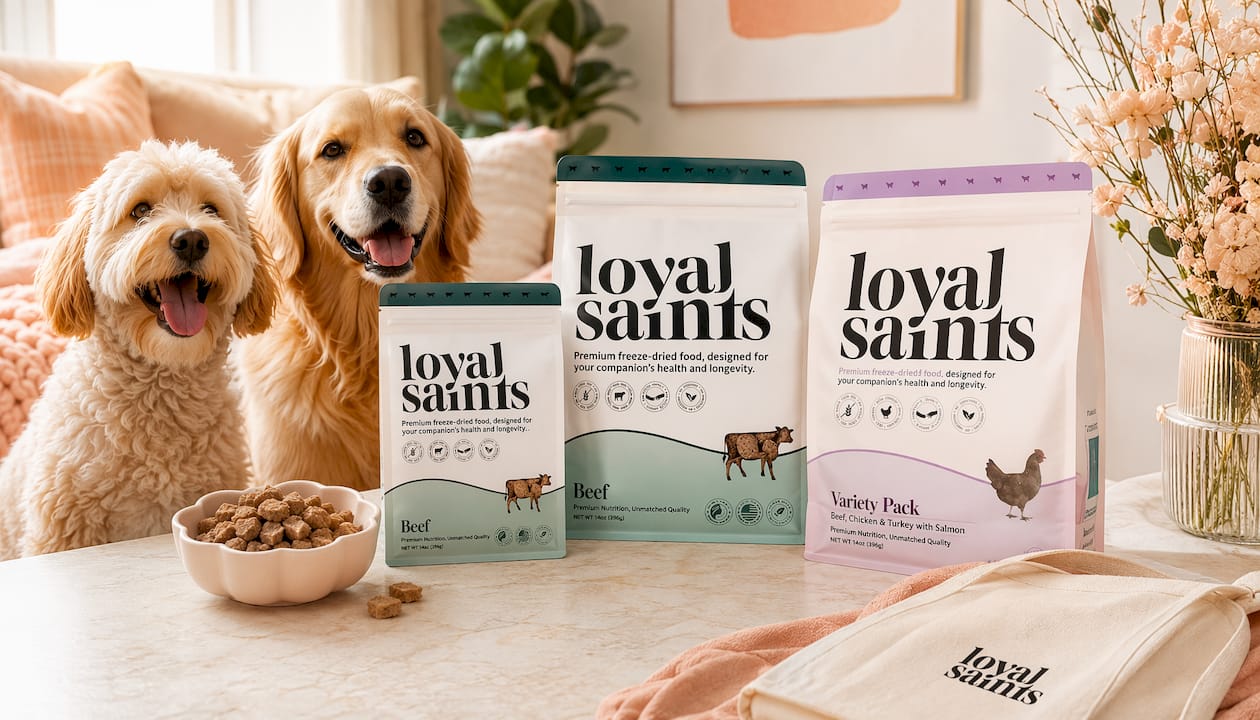
The freeze-dried raw beef 14oz delivers single-source animal protein with the nutritional integrity that active and health-focused dogs need. For smaller dogs or first-time buyers, the freeze-dried raw beef 5oz is a great way to try before committing to a larger bag. Dog owners who want variety can explore the beef, chicken, and turkey variety pack, which rotates proteins to support digestive health and keep mealtimes interesting. Loyalsaintspets products meet AAFCO standards and are formulated with veterinarian input, so you know exactly what you are feeding your dog and why.
FAQ
What does “premium” actually mean on a dog food label?
“Premium” is a marketing term with no regulatory definition in the United States. The AAFCO nutritional adequacy statement on the back of the bag is the only label claim that carries real nutritional weight.
Is expensive dog food better for my dog’s health?
Not automatically. Mid-range food provides 90–95% of premium nutritional value at roughly half the cost. Ingredient quality and AAFCO compliance matter more than price tier.
Should I buy premium dog food for a dog with health issues?
Dogs with conditions like diabetes, kidney disease, or pancreatitis typically need prescription diets, not premium commercial food. Consult your veterinarian before making any diet change for a dog with a diagnosed condition.
How do I know if a dog food has been feeding trial tested?
Check the AAFCO statement on the label. If it says “animal feeding tests using AAFCO procedures,” the food was tested on real dogs. You can also request feeding trial documentation directly from the brand.
What ingredients should I avoid in premium dog food?
Avoid foods where potatoes, tapioca, or legumes appear in the top five ingredients, especially for breeds at risk of dilated cardiomyopathy. Prioritize named animal proteins as the first and primary ingredient.


