
Rotation is a reasonable choice for a healthy dog who tolerates food well and simply benefits from variety, but it’s the wrong move the moment allergy symptoms show up. If your dog is itchy, has chronic ear infections, or shows GI upset, skip rotation and talk to your veterinarian about an elimination diet, which generally requires a consistent period of feeding a single novel or hydrolyzed protein. A controlled, single-protein diet like the freeze-dried options from Loyalsaintspets give you a clean, traceable baseline either way.
TL;DR:
- Rotation diets do not have proven benefits for preventing food allergies and may limit options for future diagnostic tests due to overexposure to multiple proteins.
- To rotate safely, introduce one new protein at a time with gradual transitions over 7 to 10 days and wait 2 to 3 months before changing proteins, especially for sensitive dogs.
- An elimination diet involves strict feeding of a single novel or hydrolyzed protein for 6 to 8 weeks and is essential for accurate diagnosis of food allergies.
- Single-protein freeze-dried diets from brands like Loyalsaintspets support both rotation and elimination by providing traceability and reducing cross-contact risks.
- Rapid or frequent swapping of proteins can cause gastrointestinal upset and reduce the effectiveness of future allergy testing by exhausting the pool of untested proteins.
Table of Contents
- What Is an Allergen Rotation Diet for Dogs?
- Does Rotation Actually Prevent Food Allergies?
- How to Rotate Proteins Safely
- When Should You Choose an Elimination Diet Instead?
- How Single-Protein Freeze-Dried Diets Support Both Approaches
- What Are the Real Risks of Rotating Dog Foods?
- Does Rotating Proteins Affect Nutritional Balance?
- What Does the Evidence Actually Show About Rotation Outcomes?
- Why Diagnostic Integrity Should Come Before Dietary Variety
- Single-Protein Options to Support Your Rotation Plan
- Sources
What Is an Allergen Rotation Diet for Dogs?
An allergen rotation diet for dogs means periodically switching your dog’s protein source, and sometimes the whole recipe, instead of feeding the same formula indefinitely. Some owners call it a “rotation diet for dogs,” others describe it as “alternating dog diets.” Both point to the same idea: swap proteins on a schedule rather than sticking with one forever.
Owners usually pick one of three approaches. Protein rotation keeps the same brand or format but cycles chicken, beef, turkey, and fish over weeks or months. Type rotation changes the format entirely, moving between kibble, freeze-dried, and fresh. Topper rotation keeps a stable base diet and adds small amounts of a different protein on top for variety, without disturbing the core formula.
Marketing around rotation often promises it prevents allergies or builds a more resilient gut. The evidence for that claim is thin. What rotation does reliably offer is dietary variety and a way to keep mealtime interesting for a picky eater.
- Protein rotation: cycling primary proteins (chicken, beef, turkey, fish) every few weeks or months
- Type rotation: alternating between kibble, freeze-dried, and fresh formats
- Topper rotation: a stable base diet with small, rotating protein toppers added on top
Does Rotation Actually Prevent Food Allergies?
No controlled clinical trial has shown that rotating proteins prevents food allergies in dogs, according to a review of the evidence by Puppy Longevity. That matters because rotation’s biggest selling point, that it “trains” the immune system or keeps allergies from developing, doesn’t hold up under scrutiny.
Continually rotating proteins limits the pool of novel proteins available for future diagnostic trials, and food allergies affect only about 1% of dogs to begin with.
True food allergies are rare compared to environmental allergies or food intolerances, yet rotation diets get marketed as a broad preventive strategy for a problem most dogs will never have.
Here’s the real risk: any protein your dog eats can become a future allergen, including the “novel” ones you’re saving for an elimination trial. Veterinarians rely on strict elimination diets, feeding one single novel or hydrolyzed protein exclusively, as the diagnostic gold standard, per the Merck Veterinary Manual. There is no reliable blood or saliva test that replaces this trial. If you’ve already rotated your dog through chicken, beef, turkey, lamb, and venison, your vet has fewer untested proteins left to work with when it’s time to actually diagnose a suspected allergy.
How to Rotate Proteins Safely
If your dog has no history of GI upset, skin issues, or diagnosed sensitivities, rotation can work, as long as you do it slowly and deliberately. The goal is variety without triggering a new reaction or muddying future diagnostics.
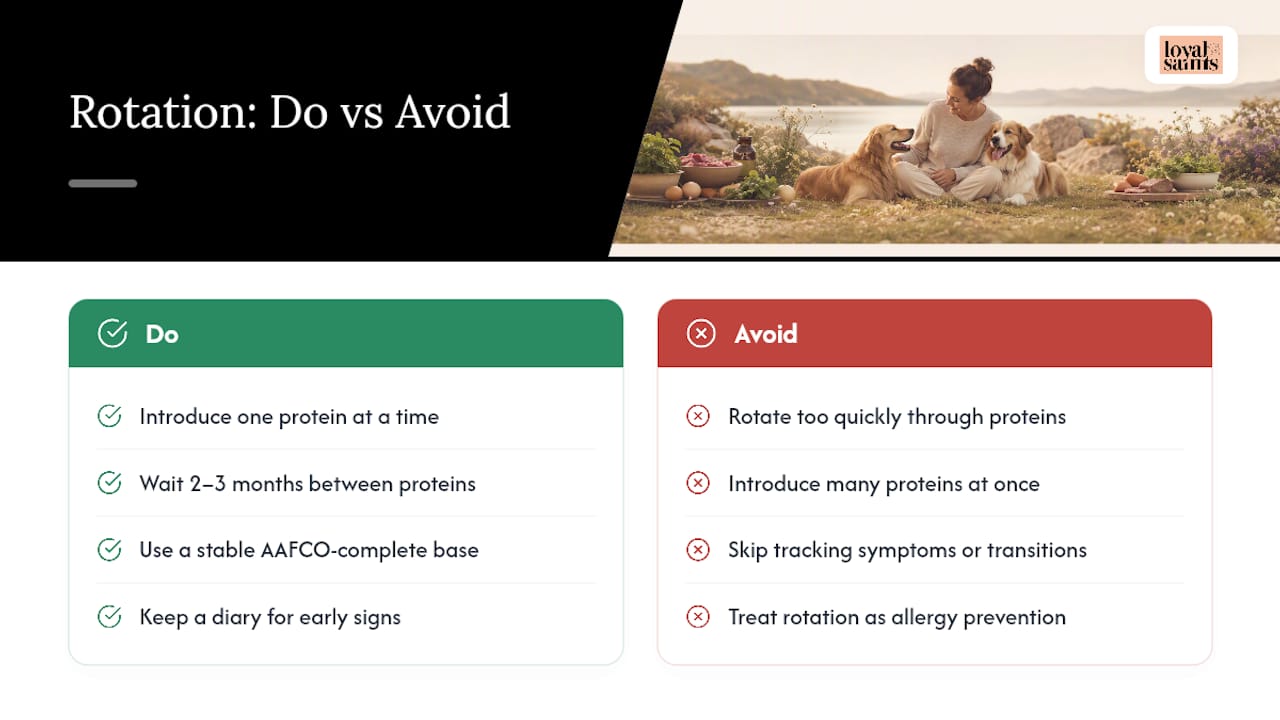
- Start with one complete-and-balanced primary diet. Choose an AAFCO-complete formula as your foundation before introducing anything new.
- Change one protein at a time. Never swap multiple proteins or ingredients in the same week.
- Space new proteins 2 to 3 months apart, or longer if your dog has shown any sensitivity in the past. Some veterinary nutritionists recommend waiting 8 to 12 weeks between new primary proteins when there’s any prior exposure history.
- Transition gradually over 7 to 10 days, mixing in the new food in roughly 20% increments. A controlled study found gradual transitions reduced diarrhea and preserved beneficial gut bacteria compared with abrupt switches.
- Slow down for sensitive dogs. If your dog has a history of a sensitive stomach, stretch the transition even further and watch closely for soft stool or scratching.
- Keep a diet diary. Log every food, treat, and topper with dates. If you see GI or skin symptoms, pause rotation immediately and go back to the last tolerated diet.
Full gut microbial and enzymatic adjustment to a new protein can take several weeks, even after the initial transition period ends, so don’t judge a new protein by the first few days alone.
Pro Tip: If full protein rotation feels risky for your dog, try topper rotation instead. Keep a stable, AAFCO-complete base diet and add small amounts of a different protein on top for variety. You get the enrichment without gambling on your dog’s diagnostic future.
For dogs already dealing with GI sensitivity, a gradual transition protocol matters even more than the specific protein you choose.
When Should You Choose an Elimination Diet Instead?
Some signs mean you should stop thinking about rotation entirely and start thinking about diagnosis. Chronic itching, recurring ear infections, paw licking, and persistent GI symptoms like vomiting or loose stool are the classic triggers for an elimination trial.
An elimination diet involves feeding a single novel or hydrolyzed protein exclusively for a sustained period, with zero exceptions. Treats, toppers, flavored medications, even the dog food your neighbor’s kid slips under the table, all of it has to stop. That’s harder than it sounds.
- Choose a protein your dog has never eaten before, or switch to a hydrolyzed diet where proteins are broken down small enough to avoid triggering an immune response.
- Avoid over-the-counter “limited ingredient” diets for diagnostic purposes. Independent testing has found cross-contamination in some OTC formulas, which can wreck an otherwise carefully run trial.
- Keep treats under 10 to 15% of daily calories, and only use treats made from the same trial protein, per guidance from Cornell Veterinary Medicine.
- After 6 to 8 weeks, your vet may recommend a re-challenge: reintroducing the old diet to confirm symptoms return, which confirms the diagnosis.
A step-by-step allergy management guide can help you keep the process organized once your vet gives the go-ahead.
How Single-Protein Freeze-Dried Diets Support Both Approaches
Whether you’re rotating for variety or holding steady for an elimination trial, the format of the food matters as much as the protein itself. Multi-ingredient kibble often carries a real risk of cross-contact between proteins during manufacturing, which can quietly undo weeks of careful dietary control.
Single-protein freeze-dried formulas simplify both situations. Loyalsaintspets makes each recipe from one traceable protein source, human-grade and free of fillers, which gives you a clean record of exactly what your dog has eaten, batch to batch. That traceability is what a diet diary depends on.
- Rehydrate freeze-dried food with warm water at the ratio listed on the bag, letting it sit 3 to 5 minutes before serving.
- During a transition, mix rehydrated new food into the old diet gradually rather than swapping bowls abruptly.
- Keep bags and batch numbers on hand in case your vet needs to review exactly what your dog has eaten.
Each formula meets AAFCO complete-and-balanced standards, so a single protein like chicken, beef, or turkey with salmon covers your dog’s full nutritional needs without requiring rotation for adequacy. Rotation, when you choose it, becomes about enrichment, not necessity. More on the format itself is available in Loyalsaintspets’ freeze-dried explainer.
What Are the Real Risks of Rotating Dog Foods?
The most immediate risk of rotation is simple GI upset. Switching proteins too fast, or too often, can trigger vomiting, diarrhea, or gas, especially in dogs with sensitive digestive systems. That’s the short-term risk most owners already expect.
The longer-term risk is subtler and more serious: exhausting your dog’s supply of “novel” proteins. Some veterinary nutritionists caution that frequent, unstructured rotation can actually increase exposure to unusual or exotic allergens your dog wouldn’t otherwise encounter, while offering no proven protective benefit in return. If your dog eventually needs an elimination trial, having already cycled through chicken, beef, lamb, duck, and venison leaves your vet with a shrinking list of untested options.
There’s also a nutritional consistency risk. Not every formula on the market meets the same AAFCO standards, so rotating between products of inconsistent quality can create gaps in micronutrients even if each individual product looks complete on paper. Rotation also makes it harder to pinpoint the cause of a reaction if one occurs, since you’re changing more than one variable at a time.
None of this means rotation is dangerous for every dog. It means rotation should be deliberate, slow, and limited to dogs with no history of food sensitivity, not a default feeding style adopted for its own sake.
Does Rotating Proteins Affect Nutritional Balance?
A dog fed a certified AAFCO-complete diet doesn’t need rotation to meet nutritional requirements. Complete-and-balanced formulas already supply the full nutrient profile a healthy adult dog needs, so rotation is about enrichment and palatability, not filling nutritional gaps.
Where balance actually becomes a concern is in the transition itself. Introducing new fats, fiber sources, or protein levels too quickly can throw off digestion even when both diets are individually complete. That’s part of why the 7 to 10 day gradual transition matters more than the specific protein you’re switching to.
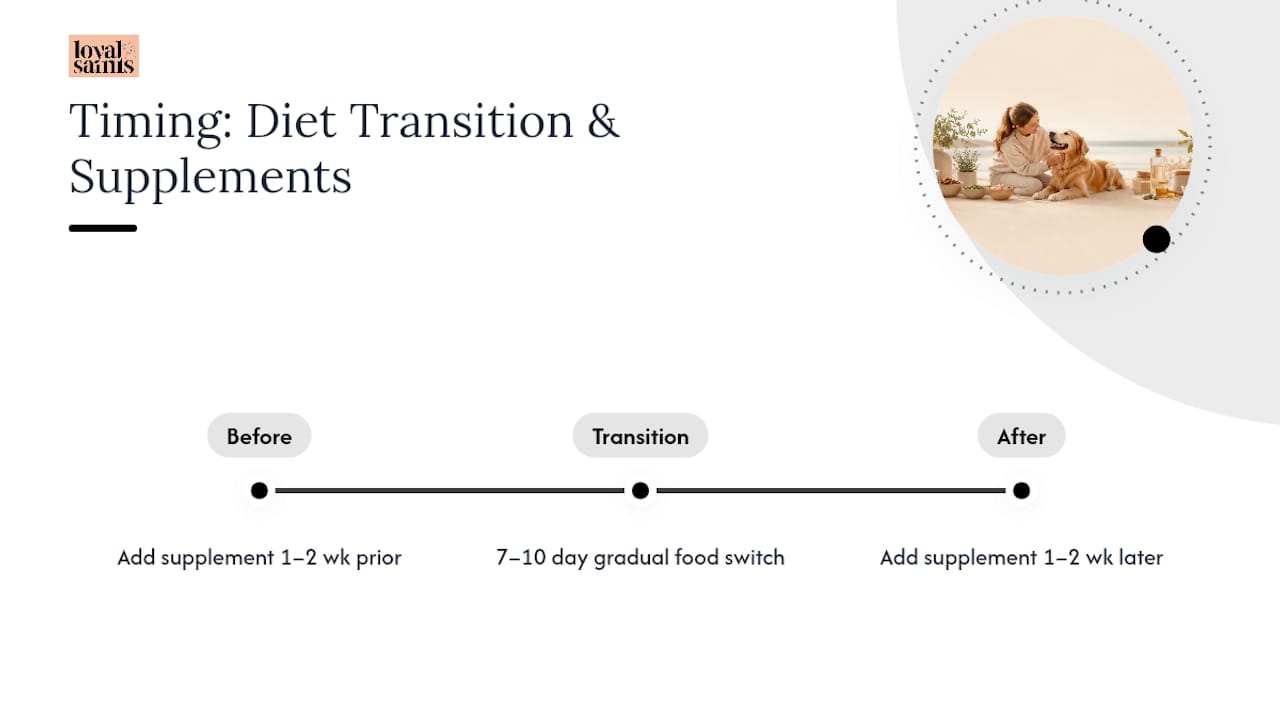
Supplementation questions come up often when owners rotate. If your dog is on a joint supplement, a probiotic, or a skin and coat additive, keep that constant across rotations rather than changing it alongside the food. Changing two variables at once makes it far harder to tell whether a new symptom came from the protein switch or the supplement change. If you do add a supplement, introduce it separately from any dietary transition, ideally a week or two before or after, so you can track its effect in isolation.
A sensitive-stomach feeding guide covers this in more depth if your dog has shown any digestive fragility in the past. For most healthy dogs, though, a stable AAFCO-complete base plus occasional, well-spaced protein changes is enough to keep both nutrition and variety in balance.
What Does the Evidence Actually Show About Rotation Outcomes?
Owners often report their dogs seem more excited about mealtime after switching to a rotation schedule, and that’s a legitimate, observable benefit. Dogs, like people, can get bored with the exact same flavor profile meal after meal, and a new protein every few months keeps things interesting without much downside for a healthy dog.
What’s missing is controlled clinical evidence that rotation changes allergy outcomes one way or the other. No peer-reviewed trial has demonstrated that rotating proteins reduces the likelihood of a dog developing a food allergy later in life. The strongest evidence-based outcomes tied to diet and skin or GI health in dogs come from elimination trials, not rotation schedules, and those trials work precisely because they remove variability rather than introduce it.
That doesn’t make rotation pointless. It makes it a quality-of-life choice rather than a medical intervention. Owners who rotate conservatively, one protein at a time, spaced months apart, on a stable AAFCO-complete base, tend to report smooth transitions and engaged eaters without incident. The dogs who run into trouble are typically the ones rotated too fast, through too many proteins, without a diary to catch early warning signs. The pattern in the available evidence points to caution and pacing as the deciding factors, not the rotation concept itself.
Why Diagnostic Integrity Should Come Before Dietary Variety
Here’s where I’ll push back on the popular framing of rotation diets: most of the enthusiasm around them treats variety as an unqualified good, the same way “more fiber” or “more probiotics” get treated as universally beneficial. That’s backwards for food allergies specifically. Variety is worth pursuing, but only after you’ve protected your ability to diagnose a problem if one shows up.
What gets underestimated is how easily a wildly rotated diet history can sabotage a future elimination trial. Vets can’t run a clean diagnostic on a dog who’s already eaten ten proteins across three years. That’s not a hypothetical, it’s a genuinely common frustration in veterinary nutrition consults. Prioritize traceability first, variety second.
If your dog is healthy and symptom-free, rotate slowly, one protein at a time, and keep meticulous records. If anything looks off, stop rotating and talk to your vet about elimination testing instead of troubleshooting on your own. The dogs who come out ahead aren’t the ones on the fanciest rotation schedule. They’re the ones whose owners kept a clean, well-documented diet history when it actually mattered.
— Kristina
Single-Protein Options to Support Your Rotation Plan
Loyalsaintspets makes controlled rotation, or a clean elimination baseline, easier because every recipe is built around one traceable protein, human-grade, with no fillers or synthetic additives.
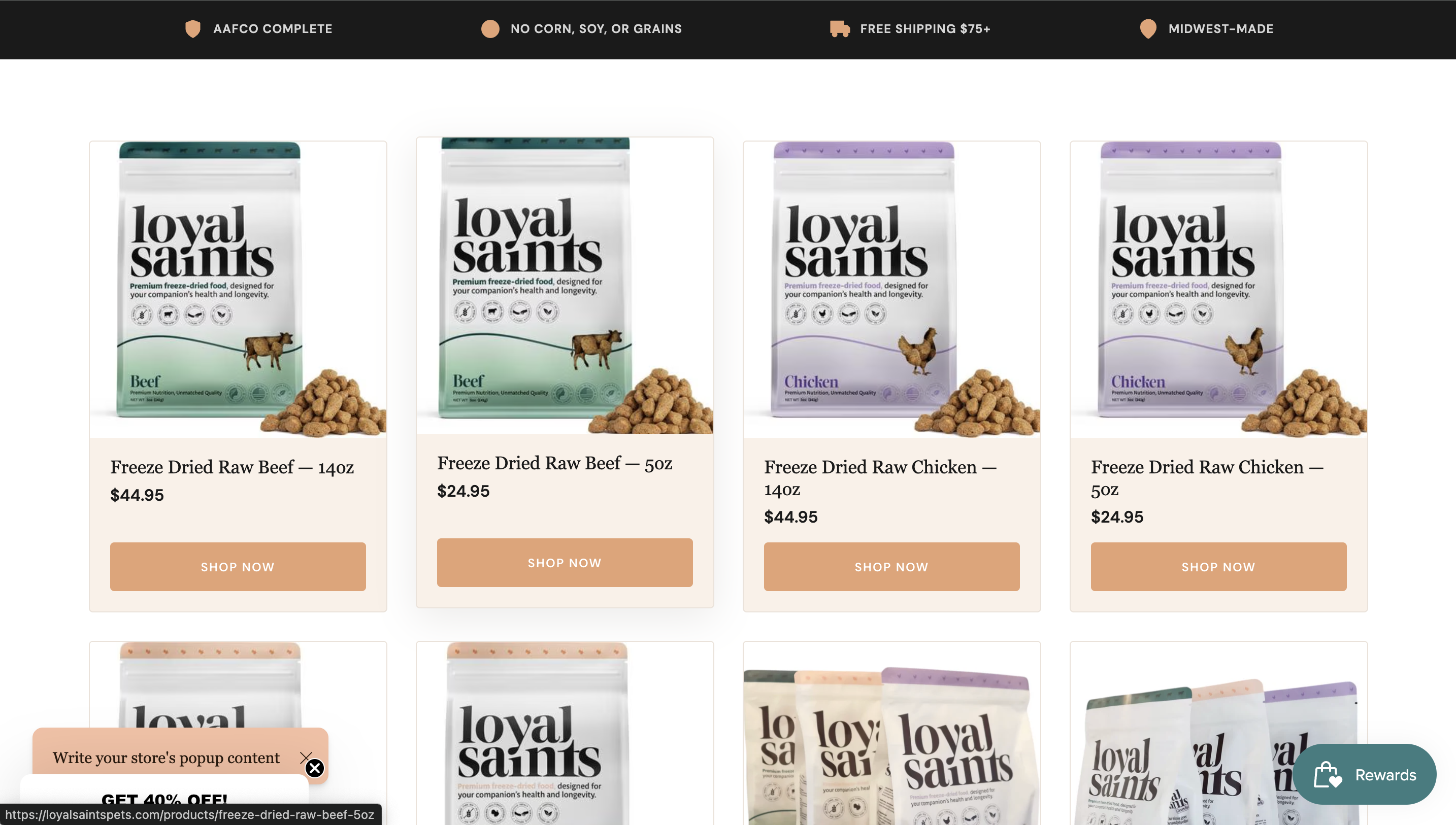
If you’re starting a conservative rotation, Freeze Dried Raw Chicken (14oz) is a mild, widely tolerated first protein for most healthy dogs. For a dog who’s already done well on chicken and is ready for the next rotation step, Freeze Dried Raw Beef (14oz) offers a distinct protein profile without hidden fillers muddying the record. Want to test a smaller batch before committing to a full bag? The 5oz Beef option and 5oz Chicken option are built for exactly that. And if your dog needs a novel combination protein for a baseline diet, Freeze Dried Raw Turkey with Salmon (14oz) or the 5oz version gives you a traceable, single-recipe option your vet can work with if an elimination trial ever becomes necessary.
Always check with your veterinarian before changing your dog’s diet, especially if symptoms are already present. Ready to start? Browse the full lineup and pick the protein that fits your dog’s next step at Loyalsaintspets.
This article is general information, not a substitute for advice from a qualified doctor. Consult a qualified healthcare professional about your own circumstances before acting on anything here.
Sources
- Food allergies and your pet | NC State Veterinary Hospital
- Nutrition in disease management in small animals | Merck Veterinary Manual
- Effects of abrupt vs gradual dietary change on gastrointestinal outcomes in puppies | PMC


