
TL;DR:
- Minimally processed, whole-ingredient diets with single proteins, prebiotics, and probiotics support optimal gut health in dogs. Freeze-dried formulas retain nutrients and microbiome substrates better than extruded kibble, leading to improved stool quality. A gradual transition and vet-approved ingredients are essential for maintaining digestive well-being.
For most dogs, whole-ingredient, minimally processed diets with targeted prebiotics, probiotics, and a high-quality single animal protein are the best foods for gut health. The gut houses roughly 70% of immune cells, so what your dog eats directly shapes their immunity, digestion, and energy. AAFCO-complete formulas built from human-grade ingredients give you the clearest path to measurable improvement.
The top food types to prioritize:
- Freeze-dried whole-ingredient formulas (minimal processing preserves nutrients and microbiome substrates)
- High-quality single-source animal proteins (chicken, beef, turkey — lower antigen load, better digestibility)
- Prebiotic fiber sources (chicory root, beet pulp, inulin — feed beneficial bacteria)
- Probiotic-rich or fermented foods (Lactobacillus, Enterococcus, Bifidobacterium strains)
- Bone broth (soothes the gut lining and boosts hydration)
- Fermented vegetable inclusions (increase microbial diversity and short-chain fatty acid production)
Loyalsaintspets offers three freeze-dried options that check every one of these boxes: Freeze Dried Raw Chicken 14oz, Freeze Dried Raw Chicken 5oz (a great trial size), and Freeze Dried Raw Beef 14oz. Most dogs show stool improvement within a few weeks; full microbiome shifts can take several weeks. If you see vomiting, bloody stool, or severe lethargy at any point, call your vet right away.
Table of Contents
- What are the best foods for a dog’s gut health?
- How do you choose a gut-healthy dog food from the label?
- Which foods and ingredients commonly harm your dog’s digestion?
- How do you switch your dog’s food without upsetting their stomach?
- Freeze-dried vs. kibble vs. canned vs. fresh: which format helps the gut most?
- When should you call your veterinarian about your dog’s digestion?
- Key Takeaways
- Why freeze-dried is the format I keep coming back to for sensitive guts
- Loyalsaintspets freeze-dried formulas for dogs with sensitive guts
- Selected research and further reading
What are the best foods for a dog’s gut health?
Freeze-dried and minimally processed whole-ingredient formulas
Processing method matters more than most labels let on. A randomized crossover trial with 23 dogs found that a minimally processed diet produced significantly better fecal consistency and higher gut microbiome alpha diversity compared to extruded kibble. Freeze-drying removes moisture without high heat, so the nutrient matrix stays intact in a way that extrusion simply cannot match.
High-quality single-source animal proteins
Human-grade sourcing isn’t just a marketing phrase. Controlled assays show that most indispensable amino acids in human-grade dog foods have digestibilities above 85%, with several exceeding 90%. That level of digestibility means less undigested protein reaching the colon, which reduces the fermentation that drives gas, loose stools, and inflammation.
Prebiotic fiber sources
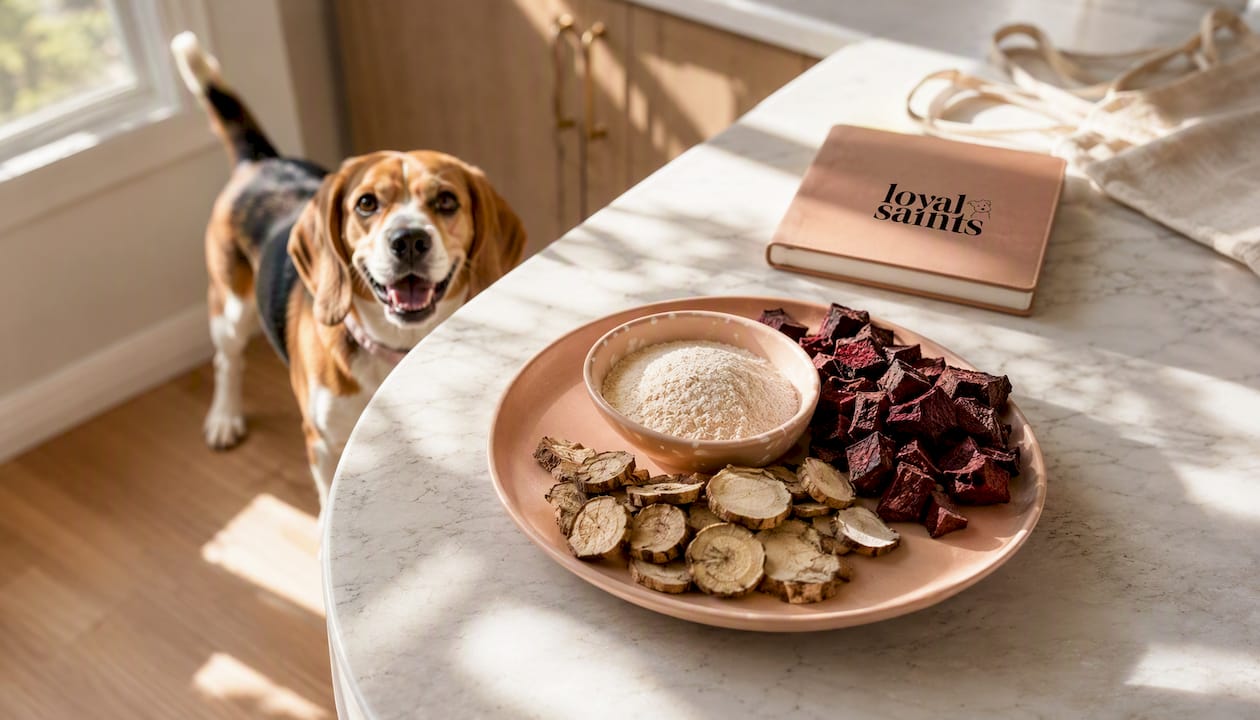
Chicory root, dried beet pulp, and inulin are the three most studied options. Soluble fibers (fruits, gums) ferment readily and fuel SCFA production; insoluble fibers (wheat bran, rice bran) add stool bulk and support transit. Your dog’s gut needs both, but the ratio matters depending on whether you’re managing diarrhea, constipation, or simply maintaining health.
Probiotics and fermented components
Lactobacillus acidophilus, Enterococcus faecium, and Bifidobacterium animalis are the strains most commonly associated with improved stool quality and digestion in dogs. Fermented foods — plain unsweetened yogurt, kefir, or fermented beet inclusions — add live cultures that support gut flora diversity. For lactose-sensitive dogs, fermented vegetable options are a safer route.
Bone broth and fermented vegetables
Bone broth delivers collagen, glycine, and gelatin that coat and soothe the intestinal lining. It also makes food more palatable during a diet transition, which helps dogs eat consistently while their microbiome adjusts. Fermented vegetable inclusions specifically shift gut metabolism toward saccharolytic fermentation, a state linked to reduced gut inflammation and better stool quality in dogs with chronic diarrhea.
How do you choose a gut-healthy dog food from the label?
Start with two non-negotiables: an AAFCO “complete and balanced” statement and evidence of veterinarian approval or vet-reviewed formulation. These confirm the food meets minimum nutrient standards for your dog’s life stage. Everything else builds from there.
What to look for on the ingredient panel:
- Named animal protein (chicken, beef, turkey) listed as the first ingredient
- Visible prebiotic fibers: chicory root, beet pulp, or fructooligosaccharides (FOS)
- Specific probiotic strains listed by name (not just “live cultures”)
- No artificial colors, flavors, or synthetic preservatives (BHA, BHT, ethoxyquin)
- No vague “meat meal” without a species name
Digestibility is harder to read from a label, but two signals help: “human-grade” sourcing and a minimally processed claim (freeze-dried or gently cooked). Foods made with human-grade ingredients also tend to have higher true metabolizable energy values than standard predictive equations suggest, so following the manufacturer’s feeding chart closely matters.
Comparison dimensions when evaluating options:
| Dimension | What to look for |
|---|---|
| Best for | Sensitive stomach, diarrhea, constipation, or food allergies |
| Processing method | Freeze-dried, gently cooked, fresh, or extruded kibble |
| Key gut-health ingredients | Prebiotic fiber, named probiotics, single-source protein |
| AAFCO-complete | Must say “complete and balanced” for your dog’s life stage |
| Palatability/digestibility | Human-grade sourcing, minimal processing, published trial data |
| Price per serving | Trial sizes help you test tolerance before committing |
Pro Tip: For dogs managing multiple issues at once, prioritize a single-protein, limited-ingredient formula first. Introduce fermentable fibers gradually over 2–3 weeks to avoid gas spikes while the microbiome adjusts.
Which foods and ingredients commonly harm your dog’s digestion?
Some ingredients don’t just fail to help — they actively damage the gut or worse.
- Onions and garlic — both contain thiosulfates that destroy red blood cells; even small amounts are toxic to dogs.
- Grapes and raisins — can cause acute kidney failure; the exact toxic compound is still under study, but no safe dose exists.
- Xylitol — a sweetener found in peanut butters, some canned pumpkin fillings, and sugar-free products; causes dangerous blood sugar crashes and liver failure.
- Artificial colors, flavors, and synthetic preservatives (BHA, BHT, ethoxyquin) — linked to digestive irritation and long-term inflammatory responses in sensitive dogs.
- Unnamed meat by-products and excessive soy or corn fillers — lower overall digestibility and can trigger sensitivities in dogs prone to gut issues.
- Abrupt high-fat meals or rich table scraps — a sudden fat load can trigger pancreatitis, a serious and painful condition.
- Dairy in lactose-intolerant dogs — causes gas, bloating, and loose stools; small amounts of fermented dairy (plain yogurt, kefir) are usually better tolerated.
- Improperly handled raw diets — raw meat carries Salmonella and Listeria risks; always follow safe handling protocols and consult your vet before starting a home-prepared raw diet.
For dogs with suspected food allergies, chicken, soy, and wheat are the most common triggers. An elimination diet — feeding a novel single protein for 8–12 weeks — is the most reliable way to identify the culprit.
How do you switch your dog’s food without upsetting their stomach?
A gradual 7–14 day transition is the standard for most dogs. Freeze-dried options are often highly palatable, so some dogs tolerate a slightly faster 3–7 day switch, but expect soft stools or mild gas in the first few days regardless.
| Day | Old food | New food | Notes |
|---|---|---|---|
| 1–3 | — | — | Watch for loose stools or gas |
| 4–6 | — | — | Stool may soften briefly — normal |
| 7–10 | — | — | Appetite and stool should stabilize |
| 7–14 | — | — | Full transition complete |
For sensitive stomachs: slow down to a 14-day schedule and hold each ratio for 3–4 days before moving forward. Monitor stool consistency, appetite, energy level, vomiting, and flatulence throughout.
Stop the transition and call your veterinarian immediately if you see vomiting that persists beyond one episode, blood in the stool, severe lethargy, or diarrhea lasting more than 48 hours.
Freeze-dried vs. kibble vs. canned vs. fresh: which format helps the gut most?
Minimally processed formats — freeze-dried, gently cooked, and fresh — tend to preserve nutrient matrices and support better digestibility and microbiome diversity than high-temperature extruded kibble. The Frontiers in Veterinary Science study is the clearest published evidence for this: minimally processed diets outperformed extruded kibble on both fecal consistency and alpha diversity measures. You can read more about what minimal processing actually means and why it matters for your dog’s health.
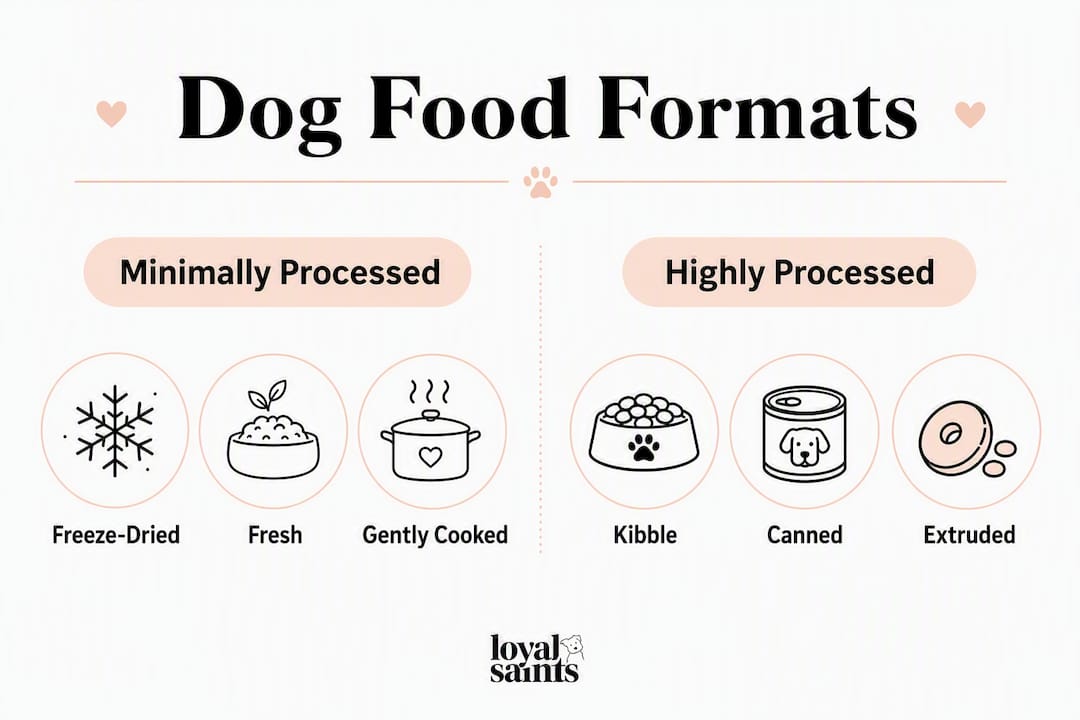
| Format | Processing method | Gut-health strengths | AAFCO-complete options | Practical tradeoffs |
|---|---|---|---|---|
| Freeze-dried | Cold, low-moisture | Highest nutrient preservation, excellent palatability | Yes (quality brands) | Higher cost; needs rehydration |
| Gently cooked/fresh | Low-heat cooking | Good digestibility, whole ingredients | Yes (quality brands) | Refrigeration required, shorter shelf life |
| Canned/wet | Retort sterilization | High moisture, good palatability | Yes | Heavier, less convenient |
| Extruded kibble | High-heat extrusion | Convenient, shelf-stable, affordable | Yes | Lower digestibility, altered nutrient structure |
A note on supplements by format: Dogs eating kibble benefit most from added digestive enzymes and a daily probiotic, since high-heat processing can reduce naturally occurring enzymes. Freeze-dried and fresh-fed dogs typically need fewer add-ons, though a targeted probiotic still helps during transitions or after illness.
When should you call your veterinarian about your dog’s digestion?
Some digestive symptoms are normal during a food transition. Others signal something that needs professional attention fast.
Red flags that require a vet call:
- Persistent vomiting (more than once, or recurring over 24 hours) — can signal obstruction, pancreatitis, or toxin ingestion
- Blood in the stool (bright red or dark/tarry) — indicates bleeding somewhere in the GI tract
- Severe lethargy combined with GI symptoms — points to systemic illness, not just a stomach upset
- Signs of dehydration (dry gums, skin that doesn’t spring back) — dangerous and fast-moving in dogs
- Sudden, unexplained weight loss — warrants a full workup, not a diet change alone
Before your appointment, gather:
- A full diet history (current food, recent changes, any table scraps or treats)
- Stool photos with timestamps
- A log of when symptoms started and how often they occur
- Any new exposures: new foods, medications, household chemicals, or outdoor toxins
Always get your vet’s approval before starting therapeutic probiotic doses, especially for immunocompromised dogs. This article is general information, not a substitute for professional veterinary care — your vet knows your dog’s full health picture.
Key Takeaways
Whole-ingredient, minimally processed diets with named single proteins, prebiotic fiber, and proven probiotic strains are the most reliable foundation for a dog’s digestive health.
| Point | Details |
|---|---|
| Minimize processing | Freeze-dried and gently cooked diets show better fecal consistency and microbiome diversity than extruded kibble. |
| Prioritize named proteins | Single-source, human-grade proteins deliver amino acid digestibilities above 85%, reducing colonic fermentation. |
| Choose fiber intentionally | Soluble fibers fuel SCFA production; insoluble fibers support stool bulk — your dog’s condition determines the right balance. |
| Transition gradually | A 7–14 day ramp prevents GI upset; call your vet if vomiting, blood, or severe lethargy appears. |
| Loyalsaintspets freeze-dried options | The Chicken and Beef formulas are AAFCO-complete, human-grade, and minimally processed — start with the 5oz trial size to monitor stool improvements. |
Why freeze-dried is the format I keep coming back to for sensitive guts
The conventional wisdom says any AAFCO-complete food is fine. I’d push back on that. Two foods can both carry the AAFCO statement and still perform very differently in the gut, because the statement says nothing about how the food was processed or how digestible its proteins actually are.
What the research shows is that processing temperature and pressure change the food’s chemistry in ways that matter to the microbiome. Freeze-drying sidesteps that problem entirely. The food stays as close to its whole-ingredient state as shelf-stable packaging allows, which means the prebiotic substrates, amino acids, and natural enzymes arrive in the gut largely intact. That’s not a small thing for a dog with a sensitive stomach or a history of chronic loose stools.
The other piece that gets underestimated is palatability. A gut-healthy diet only works if your dog actually eats it consistently. Freeze-dried formulas tend to have a flavor intensity that even picky eaters respond to, which makes the transition smoother and the monitoring more reliable. You’re not fighting your dog to eat the food while also trying to track stool changes.
My honest recommendation: start with a trial size, watch the stool for two weeks, and let the results guide you. The science gives you a strong prior that minimally processed wins. Your dog’s response confirms it.
Loyalsaintspets freeze-dried formulas for dogs with sensitive guts
Your dog’s gut deserves food that’s built from the ground up for digestibility, not reformulated from commodity ingredients. Loyalsaintspets freeze-dried formulas are human-grade, AAFCO-complete, and made with single or limited animal proteins — no fillers, no synthetic additives, and no guesswork about what’s actually in the bag.
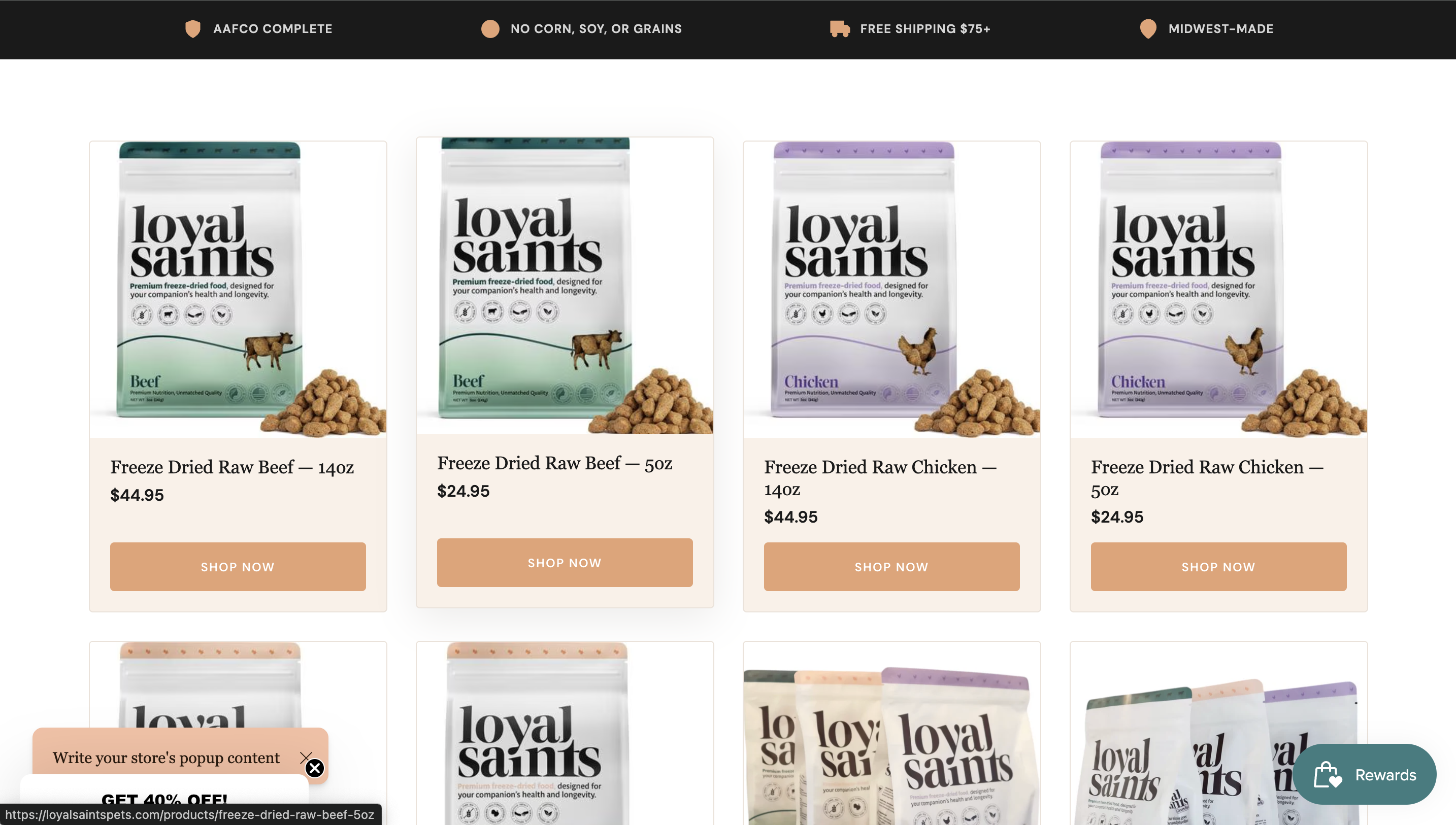
The three core options map directly to what the research supports:
- Freeze Dried Raw Chicken 14oz — single-protein chicken, ideal for dogs with sensitive stomachs or suspected food sensitivities; highly digestible amino acids, added prebiotic fiber
- Freeze Dried Raw Chicken 5oz — the same formula in a trial size, perfect for testing digestive tolerance before committing to a full bag
- Freeze Dried Raw Beef 14oz — a red-meat alternative for dogs who need a novel protein or simply thrive on beef
All three are vet-approved, shelf-stable, and formulated without the high-heat extrusion that affects nutrient availability in conventional kibble. Want to understand the full science behind the format? The Why Freeze Dried? page walks through it clearly.
Join the Halo Club subscription for automatic discounts and free shipping on every order. Start with the 5oz trial, watch your dog’s stool and energy over two weeks, and go from there.
Selected research and further reading
“The dietary intervention improved clinical signs and had a clear effect on the gut microfloral metabolic output of canines with chronic diarrhea, shifting gut metabolism from a predominantly proteolytic to saccharolytic fermentative state.”
Microbiome function underpins the efficacy of a fiber-supplemented dietary intervention in dogs with chronic large bowel diarrhea — PMC
- True nutrient and amino acid digestibility of dog foods made with human-grade ingredients — PMC — supports amino acid digestibility claims and human-grade sourcing benefits
- Diet-induced metabolic and fecal microbiome responses in pet dogs fed a minimally processed versus extruded kibble diet — Frontiers in Veterinary Science — key evidence for processing effects on fecal consistency and microbiome diversity
- Microbiome function underpins the efficacy of a fiber-supplemented dietary intervention in dogs with chronic large bowel diarrhea — PMC — fiber intervention outcomes and saccharolytic fermentation shift
- Natural feeding and its effects on the intestinal health of dogs and cats — Research, Society and Development — balanced review of raw and minimally processed diet research
- Premium Dog Food Ingredients: 7 Essential Must-Haves — The Pet Vet — probiotic strains, prebiotic fiber sources, and the gut-immune connection
- Dog Nutrition: Guide to Dog Food Nutrients — PetMD — soluble vs. insoluble fiber roles in canine digestion
- What to Add to Your Dog’s Diet to Boost Gut Health — AKC — practical food additions including fermented foods and lean proteins
- Dietary supplementation with soluble corn fiber improved fecal score, microbiota, and SCFAs in dogs — Frontiers in Veterinary Science — prebiotic fiber effects on microbiota composition and SCFA production


