
If your dog has IBS or IBD, the first move is an exclusive diet trial: a veterinarian-approved, novel-protein or hydrolyzed diet, fed with zero treats, table scraps, or flavored medications for at least two weeks. Log stool consistency, appetite, and energy every day. This single step, done strictly, tells you and your vet more than almost any other early intervention.
Most dogs show meaningful change within 7 to 14 days. If your dog is improving by day 14, you continue the same diet for 6 to 12 weeks to let the gut lining actually heal, not just calm down temporarily. If there’s no change, or your dog is losing weight, that’s your cue to test serum cobalamin (B12) and revisit the plan with your vet.
Here’s what makes or breaks this trial in the first two weeks:
- Pick ONE protein source your dog has never eaten before, or a hydrolyzed veterinary diet
- Feed nothing else. No treats, no dental chews, no “just a bite” of your dinner
- Track stool form, vomiting episodes, and appetite daily on paper or in your phone
- Weigh your dog weekly if you have a scale, or ask your vet’s office to do quick checks
Roughly 50 to 70% of dogs with chronic enteropathy respond to dietary therapy alone, with the higher end of that range showing up in trials using elemental or hydrolyzed diets. That’s a strong reason to give the diet trial a real, uninterrupted shot before jumping to medication.
Key Takeaways
Successful IBS and IBD management in dogs depends on strict exclusive diet trials lasting at least 2 weeks, continued for 6 to 12 weeks if improving, with B12 testing when progress stalls.
| Point | Details |
|---|---|
| Start with exclusivity | Feed one novel-protein or hydrolyzed diet only, with zero treats or table scraps, for 14 days. |
| Transition slowly | Move to the new diet over 7 to 10 days to avoid a flare from the switch itself. |
| Test B12 if stalled | Check serum cobalamin if weight loss continues or improvement stalls despite the right diet. |
| Reintroduce one ingredient at a time | Wait 7 to 10 days between additions after a successful trial to isolate true intolerances. |
| Use Loyalsaintspets for exclusion trials | Single-protein freeze-dried chicken, beef, and turkey with salmon simplify exclusive feeding with AAFCO-complete recipes. |
Table of Contents
- Which IBS Dog Diet Type Fits Your Dog’s Symptoms?
- How Do You Run a Diet Trial Step by Step?
- Three Home-Prepared Sample Plans for a Diet Trial
- When Should You See a Vet Instead of Adjusting Diet?
- Using Loyalsaintspets Freeze-Dried Proteins During a Trial
- Common Ingredient Triggers Behind Canine IBS and IBD
- Do Probiotics Actually Help Dogs With IBS?
- Should You Adjust Water and Meal Timing Too?
- Which Supplements Have Real Evidence Behind Them?
- How Do You Reintroduce Foods After a Successful Trial?
- Do Age, Breed, or Other Conditions Change the Approach?
- What Actually Moves the Needle for Dogs With IBS
- Try Loyalsaintspets During Your Dog’s Diet Trial
- Frequently Asked Questions
- Sources
Which IBS Dog Diet Type Fits Your Dog’s Symptoms?
Not every IBS dog diet works the same way, and picking the wrong category wastes weeks you don’t have. Each therapeutic diet type targets a different piece of the problem, from immune reactivity to fat malabsorption.
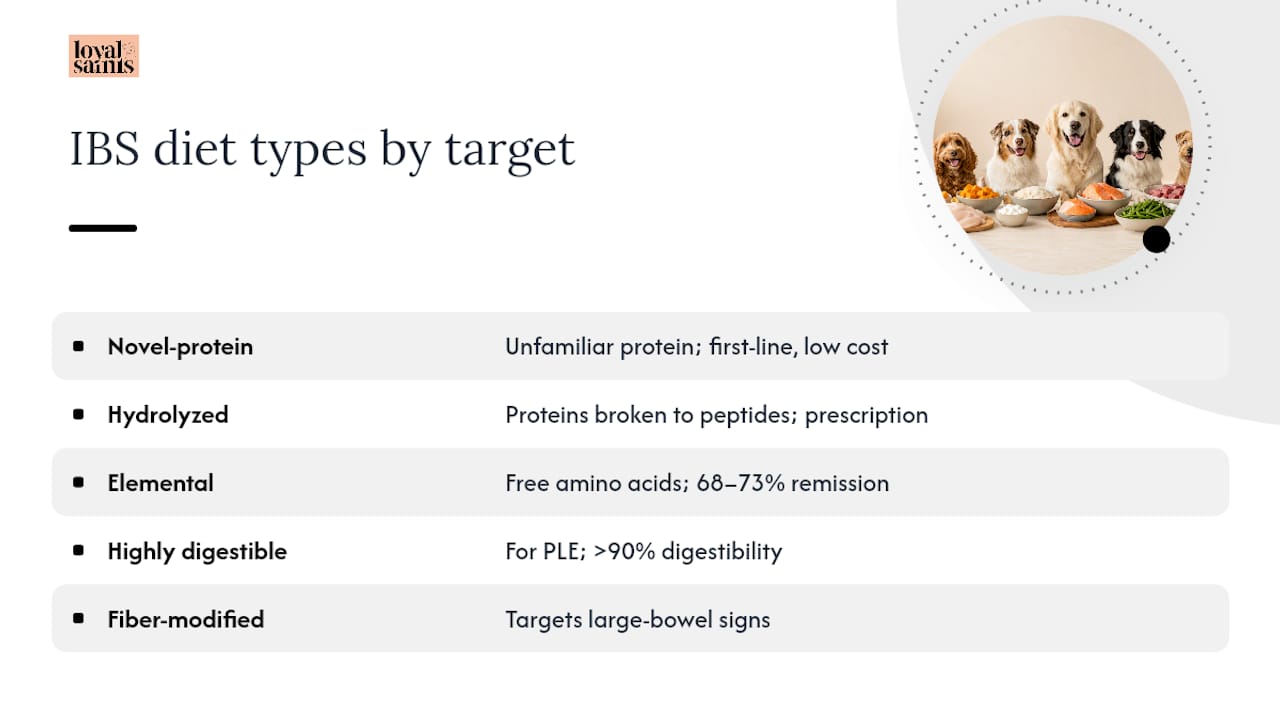
Novel-protein diets pair a protein your dog has never eaten (rabbit, kangaroo, venison) with a single carbohydrate source. The logic is simple: if the immune system has never seen that protein, it’s less likely to react to it. These work well as a first-line, lower-cost option, but only if you’re certain about your dog’s full dietary history, including old treats and past foods.
Hydrolyzed diets break proteins down into peptides so small the immune system typically can’t recognize them as a threat at all. These are prescription-only and tend to outperform novel-protein diets in dogs with a long history of diet changes, since a truly novel protein gets harder to find the more foods a dog has tried.
Elemental (amino-acid) diets go a step further, using free amino acids instead of any protein structure. A controlled trial found remission rates of roughly 68 to 73% using elemental diets, with responders showing measurable shifts in fecal microbiome composition. These diets are typically reserved for dogs who failed a hydrolyzed trial or have severe disease.
Highly digestible, low-fat diets matter most for dogs with protein-losing enteropathy (PLE), since digestibility above 90% reduces the fecal volume and workload on an already inflamed gut. Fiber-modified diets help dogs whose main symptoms point to the large bowel, like straining or mucus in the stool, rather than the small intestine.
Pro Tip: Skip over-the-counter “limited ingredient” bags for the exclusion phase. Independent testing has repeatedly found trace contamination with undeclared proteins in commercial pet food, which can quietly ruin an otherwise well-run trial.
If your vet recommends a fiber-modified approach, our guide on dietary fiber and the gut microbiome in dogs breaks down which fiber types actually help versus which ones aggravate loose stool.
How Do You Run a Diet Trial Step by Step?
A diet trial only produces useful information if you run it correctly. Rushing the transition or breaking exclusivity even once can invalidate two weeks of otherwise good data.
- Choose the diet with your vet. Confirm it’s genuinely novel for your dog, or a hydrolyzed/elemental formula if history is complicated.
- Transition over 7 to 10 days. Transitioning too fast, under three to five days, is a common trigger for a flare during the switch itself, which muddies whether symptoms come from the old food or the change.
- Go fully exclusive for 14 days. No treats, no flavored heartworm chews, no supplements unless your vet clears them.
- Log daily. Stool score, vomiting, appetite, and general energy, using a simple 1 to 5 scale for each.
- Reassess at day 14. Improving dogs continue the same diet for 6 to 12 weeks. Non-responders typically move to a different diet category or further diagnostics.
Sensitive dogs or those with a history of flares may need 10 full days instead of 7.
Exclusive feeding compliance is the single biggest factor in whether a trial succeeds, and that includes multi-dog households where another pet’s kibble sits within reach, and daycare or boarding situations where staff might hand out treats without knowing.
Pro Tip: Bring a simple written log to your vet visit, even a notebook with dates and a 1 to 5 stool score column. Vets can act on trends far faster than on “he’s been better lately.”
Three Home-Prepared Sample Plans for a Diet Trial
When commercial novel-protein or hydrolyzed diets aren’t working, or you want more control over exactly what’s in the bowl, balanced home-prepared diets can serve as an effective diagnostic option under veterinary supervision. These are conceptual starting points, not finished recipes, and they need review before long-term use.
- Fish and sweet potato: tilapia or another mild whitefish with cooked, mashed sweet potato, lightly oiled for calories
- Pork and barley: lean ground pork with well-cooked barley, useful when fish or poultry have already been tried and failed
- Turkey and oats: plain cooked turkey with rolled oats, often well tolerated by dogs sensitive to red meat
For a small dog around 5 kilograms, a daily plan built on one of these combinations typically needs to be scaled to that dog’s resting energy requirement, which your vet or a veterinary nutritionist can calculate precisely based on weight and activity.
None of these plans are nutritionally complete on their own for more than a few weeks. You’ll need a vet-recommended multivitamin/mineral supplement or a commercial balancing powder formulated for home-cooked diets, and ideally a veterinary nutritionist reviewing the full recipe if you plan to feed it past the trial period.
Feeding logistics matter almost as much as ingredients. Split meals into three or four smaller portions a day instead of one or two large ones, since smaller meals are easier on an inflamed gut and reduce the vomiting that sometimes follows a big meal. If you’re testing a freeze-dried option instead of cooking from scratch, reconstitute with warm water and let it sit a few minutes for better palatability, especially with dogs who are picky when nauseated.
When Should You See a Vet Instead of Adjusting Diet?
Diet trials work for a majority of chronic enteropathy cases, but some signs mean you should stop experimenting at home and get to a vet promptly.
- Rapid or severe weight loss despite eating normally
- Swelling in the belly or legs (possible ascites or edema from protein loss)
- Vomiting that won’t stop, or vomiting blood
- Black, tarry stool (melena), which can signal GI bleeding
- Severe lethargy or signs of dehydration, like sunken eyes or sticky gums
If any of these show up, your vet will likely run bloodwork (CBC and chemistry panel), check serum cobalamin, and may recommend an abdominal ultrasound or fecal testing. Endoscopy with biopsy comes into play when imaging and bloodwork don’t explain the picture, particularly if protein-losing enteropathy is suspected. When medications like antibiotics or immunosuppressives enter the picture, the diet doesn’t get dropped. It usually continues alongside treatment, since diet appears to work partly by shifting the gut microbiome in ways medication alone doesn’t replicate.
Using Loyalsaintspets Freeze-Dried Proteins During a Trial
A single-protein, freeze-dried option can simplify an exclusive trial considerably, since you’re not measuring multiple ingredients or worrying about hidden fillers. Loyalsaintspets makes freeze-dried raw chicken, freeze-dried raw beef, and freeze-dried raw turkey with salmon, each built around one primary protein source with no fillers or synthetic additives, and formulated to meet AAFCO standards for complete nutrition.
During an exclusive diet trial, simplicity is the point. One protein, one ingredient list you can read out loud to your vet in ten seconds, no guessing about what triggered a flare.
Here’s how these fit into the protocol already covered:
- Confirm with your vet that the protein (chicken, beef, or turkey) is appropriate for your dog’s history and hasn’t been fed recently.
- Weigh out portions based on your dog’s resting energy requirement rather than eyeballing scoop sizes.
- Reconstitute with warm water per the package guidance and let it rehydrate fully before serving.
- Feed it as the only food source for the full trial period. No mixing in old kibble, no rotating proteins mid-trial.
- Check with your vet before adding any supplement, including B12 or omega-3 products, so the trial stays clean.
Pro Tip: Keep one unopened bag of whatever protein worked during the trial. If symptoms return months later, restarting that exact diet immediately gives you a faster answer than starting from scratch.
Learn more about how the process preserves nutrients on the why freeze-dried page, and pair any exclusion diet with general supportive care from our digestive health improvement guide.
Common Ingredient Triggers Behind Canine IBS and IBD
Certain ingredients show up disproportionately often as triggers in dogs with chronic digestive inflammation, which is exactly why the exclusion phase of a diet trial matters so much.
Beef, dairy, wheat (gluten), chicken, and egg are the proteins and grains most frequently implicated in canine food sensitivities, largely because they’re the most common ingredients in commercial dog food to begin with. A dog that’s eaten chicken-based kibble for six years has had six years of immune exposure to that protein, which is exactly why “chicken” often stops qualifying as novel for that individual dog.
Dairy deserves specific attention. Many adult dogs lose much of the lactase enzyme needed to digest lactose properly, so cheese, yogurt, or milk given as treats can trigger loose stool that looks like an IBD flare but is really simple lactose intolerance. Cutting dairy entirely during a trial removes this confounding variable.
Gluten sensitivity is less common in dogs than the marketing around grain-free diets suggests, but it’s real in a subset of dogs, and it’s worth ruling out with a genuinely grain-free novel-protein diet if wheat-based commercial food was a long-term staple.
High-fat treats and table scraps are an underrated trigger category. Fat delays gastric emptying and can worsen symptoms in dogs with protein-losing enteropathy specifically, even when the protein source itself isn’t the problem. This is one more argument for the strict no-treats rule during the exclusive phase: a single fatty scrap can produce symptoms that look like a protein reaction but are actually a fat-tolerance issue entirely.
Do Probiotics Actually Help Dogs With IBS?
Probiotics can support a diet trial, but they’re a complement to diet change, not a substitute for it. The evidence for specific canine probiotic strains is still developing, and results vary by strain, dose, and the individual dog’s existing gut flora.
Certain Enterococcus faecium and multi-strain formulations have shown modest benefits for stool consistency in some studies, though results are inconsistent enough that no single strain qualifies as a guaranteed fix. Prebiotics (fermentable fibers like inulin or fructooligosaccharides) feed the beneficial bacteria already present in the gut, and some fiber-modified therapeutic diets already include them at clinically relevant levels.
If you’re adding a probiotic during a diet trial, introduce it at the same time you start the new diet rather than midway through, so you’re not left wondering which change caused which result. Ask your vet about veterinary-specific formulations rather than human probiotics, since dosing and strain selection differ meaningfully between species. Our partner guide on digestion-friendly feeding walks through how probiotics fit into a broader feeding routine, if you want more detail beyond the trial itself.
Skip probiotic rotation during the exclusive phase. Switching brands or strains partway through adds a variable you don’t need while you’re trying to isolate what’s actually helping your dog.
Should You Adjust Water and Meal Timing Too?
Hydration and meal frequency changes work alongside diet changes, not instead of them, and both are easy wins most owners overlook.
Dogs with active GI inflammation lose extra fluid through loose stool and sometimes vomiting, so water access matters more than usual during a flare. Adding a splash of water or low-sodium broth to meals boosts fluid intake without forcing a dog to drink more than they want. Watch for skin tenting or sticky gums as basic signs of dehydration, especially in smaller dogs whose fluid reserves are already lower.
Meal frequency shifts help too. Splitting daily food into three or four smaller meals instead of one or two large ones reduces the volume the gut has to process at once, which tends to ease vomiting and reduces the workload on an inflamed intestinal lining. This matters even more for dogs with delayed gastric emptying, a common feature in chronic enteropathy.
Management of chronic enteropathy is genuinely multidimensional. Meal size, exclusivity, and hydration carry real weight alongside the ingredient list itself, and skipping any one of them can blunt the results of an otherwise well-chosen diet.
Which Supplements Have Real Evidence Behind Them?
Omega-3 fatty acids, sourced from fish oil, have the most consistent research support among supplements commonly recommended for canine IBS and IBD, largely for their anti-inflammatory effect on the gut lining. Dosing needs to come from your vet, since fish oil at the wrong amount can cause its own GI upset or interact with other treatments.
Vitamin B12 (cobalamin) supplementation matters specifically for dogs who test low on serum cobalamin, which happens often enough in chronic enteropathy that testing is considered standard rather than optional. Supplementing B12 in a deficient dog can meaningfully speed recovery, since the gut’s ability to absorb nutrients from even a perfect diet depends partly on adequate B12 status to begin with.
Beyond those two, evidence gets thinner. Turmeric, slippery elm, and various “gut-soothing” herbal blends are popular in pet-owner circles, but the research backing specific dosing and efficacy in dogs remains limited compared to the diet and B12 evidence. Treat these as optional additions to discuss with your vet rather than core components of the trial itself, and never add a new supplement during the critical first two exclusive weeks, since it introduces a variable that can mask or mimic a true dietary response.
How Do You Reintroduce Foods After a Successful Trial?
Once your dog has been stable for 6 to 12 weeks on the trial diet, reintroduction lets you figure out exactly what triggers symptoms, rather than keeping your dog on a restricted diet forever unnecessarily.
Add one new ingredient at a time, waiting 7 to 10 days between each addition before introducing the next. This slow pace matters because delayed food reactions can take several days to show up, and adding two ingredients close together makes it impossible to know which one caused a flare if symptoms return.
Start with lower-risk ingredients your dog hasn’t reacted to before, and save the ingredients most commonly associated with sensitivities, like dairy, wheat, or the protein your dog originally ate before the trial, for later in the sequence. Keep the same daily log you used during the initial trial: stool score, appetite, energy, and any vomiting.
If symptoms return after adding an ingredient, remove it immediately, let your dog return to baseline on the trial diet for at least a week, then continue testing other ingredients. That returning ingredient becomes a confirmed intolerance worth noting permanently, and it’s exactly the kind of specific, useful information your vet can build a long-term feeding plan around.
Do Age, Breed, or Other Conditions Change the Approach?
Puppies with suspected IBS need faster escalation to a vet than adults do, since growing dogs have less nutritional reserve and can decline quickly if a diet trial drags on without improvement. Extended novel-protein or elemental diets in puppies should always include veterinary nutritionist input to confirm growth needs are still being met.
Senior dogs often carry concurrent conditions like kidney disease or osteoarthritis that affect which therapeutic diet fits best. A low-fat diet chosen for GI symptoms, for instance, needs to be checked against any existing renal diet requirements rather than assumed compatible.
Certain breeds show a genuine predisposition to specific enteropathies. German Shepherds and Chinese Shar-Peis appear more frequently in clinical literature on protein-losing enteropathy and immunoproliferative enteropathy, which may shift diagnostic urgency and the choice between diet-only management versus earlier medication. Dogs with concurrent conditions like pancreatitis add another layer, since pancreatitis specifically requires a stricter low-fat approach than most standard GI diets provide, and the two conditions together sometimes mean the fat threshold for a comfortable IBD diet is actually too high for the pancreas to tolerate.
What Actually Moves the Needle for Dogs With IBS
The conventional advice treats every IBS dog diet like a shopping decision: find the “best” bag, switch, done. That framing undersells the two variables that actually determine outcomes: strict exclusivity during the trial, and giving a diet the full 6 to 12 weeks it needs before judging it a failure. Owners who switch foods every 10 days chasing faster results usually end up with murkier data than owners who commit fully to one plan and simply wait it out.
The B12 testing point gets skipped more than it should. A dog can be on the textbook-perfect diet and still stall out because cobalamin deficiency is quietly blocking recovery underneath it. That single blood test resolves more mystery cases than another round of ingredient substitution.
If you take one thing from this article, make it exclusivity. Not the fanciest protein, not the trendiest supplement. Just total commitment to one clean diet, tracked daily, for as long as it takes to know if it’s working.
Try Loyalsaintspets During Your Dog’s Diet Trial
Loyalsaintspets gives you single-protein, freeze-dried options built specifically for the kind of exclusive feeding trial this article walks through, without the guesswork of reading a ten-ingredient label to spot hidden allergens. Every recipe is human-grade, AAFCO-complete, and free of fillers or synthetic additives, so what you see on the label is genuinely what’s in the bag.
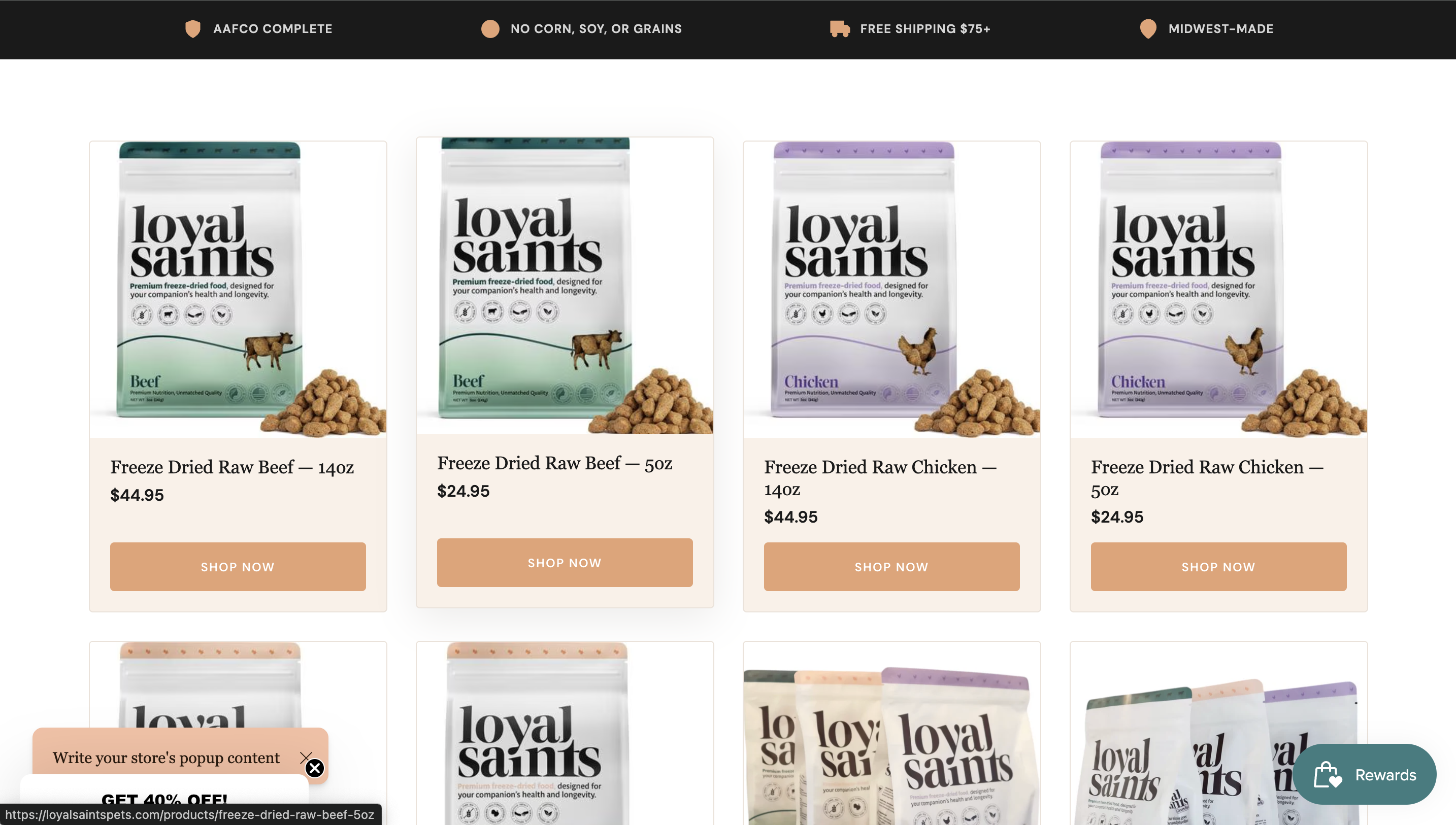
If your vet has cleared chicken, beef, or turkey as an appropriate protein for your dog’s trial, start with the Freeze Dried Raw Chicken 5oz or Freeze Dried Raw Beef 5oz size to test palatability before committing to a larger bag. Once you know your dog tolerates it well, the 14oz sizes and the Halo Club membership make ongoing feeding more affordable with recurring discounts and free shipping. For dogs who stabilize and are ready to rotate proteins later, the Variety Pack offers beef, chicken, and turkey with salmon in one order. Talk to your vet about which protein fits your dog’s history, then place your first order today.
Frequently Asked Questions
How long should a dog stay on an IBS diet trial before you know if it’s working?
Most dogs show some response within 7 to 14 days. If there’s improvement by day 14, continue the same diet for 6 to 12 weeks total before considering it a long-term fix.
Can probiotics replace a diet trial for a dog with IBS?
No. Probiotics can support recovery alongside diet change, but the diet itself, particularly exclusivity, is what produces measurable clinical improvement in most dogs.
What’s the difference between a hydrolyzed diet and a novel-protein diet?
A novel-protein diet uses a whole protein your dog has never eaten. A hydrolyzed diet breaks any protein into peptides small enough that the immune system typically doesn’t react to them, which matters for dogs with extensive dietary histories.
Is home-cooked food safe for a dog with IBS long term?
Home-prepared diets can work well during a diagnostic trial, but they need review from a veterinary nutritionist for long-term feeding to avoid nutritional gaps that develop slowly over months.
Should I test my dog’s B12 levels even if the diet seems to be working?
Yes, if weight loss continues or progress stalls despite an appropriate diet. Cobalamin deficiency can quietly block full recovery even on an otherwise correct feeding plan.
Sources
- Exclusive enteral nutrition and elemental diets trial results (PMC article)
- Nutritional management of chronic enteropathies in dogs (Today’s Veterinary Practice / ACVN notes)
- Inflammatory bowel disease and the home-prepared diet (Cornell)
Recommended
- How to Help Your Dog’s Gut Health: A Diet-First Plan | The Loved by Loyal Saints Blog
- Best Food for Dogs With Sensitive Stomachs | The Loved by Loyal Saints Blog
- Best Foods for Gut Health: A Dog Owner’s Guide | The Loved by Loyal Saints Blog
- Dog Digestive Health: Natural Solutions That Work | The Loved by Loyal Saints Blog


