
Use single-protein diets when you need to reduce dietary variables for a dog with suspected food sensitivities, as explained in this guide to single protein dog food. Use well-formulated multi-protein diets for most healthy dogs with no history of allergies or GI upset. The catch: commercial “single-protein” bags can still carry trace amounts of other proteins from shared manufacturing lines, and a true diagnostic elimination trial often calls for a vet-guided plan using novel or hydrolyzed protein.
- Suspected allergy or chronic GI/skin issues → start with single-protein, ideally vet-supervised.
- Healthy dog, no symptoms → a balanced multi-protein diet is fine and often better for nutrient variety.
- Strict diagnosis needed → commercial single-protein may not be rigorous enough; ask about hydrolyzed or novel-protein prescription diets.
TL;DR:
- Commercial single-protein diets may still contain trace amounts of other proteins due to shared manufacturing lines, so vet supervision is recommended for strict elimination trials.
- Multi-protein diets provide broader amino-acid coverage and dietary variety but can complicate identifying specific sensitivities if symptoms develop.
- A vet-guided elimination protocol for symptomatic dogs lasts 8 to 12 weeks and usually involves novel or hydrolyzed diets to ensure diagnostic accuracy.
- Healthy dogs without symptoms generally tolerate balanced multi-protein diets, which support nutrient diversity and lower the risk of nutrient gaps.
- Selecting a diet should prioritize the dog’s health status, with vet input essential for allergy testing, organ conditions, or when managing suspected food sensitivities.
Table of Contents
- Single vs Multi Protein Dog Food: Definitions and Label Reading
- Why Single-Protein Diets Help Sensitive Dogs
- Multi-Protein Diets: Why They Work for Most Healthy Dogs
- How to Choose Between Single- and Multi-Protein Dog Food
- What the Research Says About Protein Quality and Digestibility
- How Protein Choice Affects Kidney Disease and Food Allergies
- Environmental and Ethical Considerations of Protein Choice
- Cost Comparison: Single-Protein vs Multi-Protein Dog Food
- Why We Build Single-Protein Meals the Way We Do
- Finding the Right Loyal Saints Formula for Your Dog
- Key Takeaways
- Sources
Single vs Multi Protein Dog Food: Definitions and Label Reading
A single-protein (monoprotein) diet uses one animal protein source, like chicken or beef, and nothing else as the primary meat ingredient. A limited-ingredient diet (LID) goes a step further, restricting the entire recipe to a short list of ingredients, not just the protein. A novel protein is one your dog has likely never eaten, such as rabbit or venison, chosen specifically because there’s no history of sensitization. A hydrolyzed protein diet breaks proteins down into fragments too small for the immune system to recognize, which is why vets reach for it in tough allergy cases. Multi-protein recipes blend two or more animal proteins in the same formula.
Reading a label takes more than a glance at the front of the bag:
- Check the first ingredient. It should be a named meat (“chicken,” “beef”), not a vague “meat” or “meat meal.”
- Scan for “flavor” language. A “chicken flavor” product can legally contain little actual chicken and trace amounts of other proteins.
- Ask about shared production lines. Cross-contact during manufacturing is common even on true single-protein formulas.
Pro Tip: Call the manufacturer directly and ask whether the specific SKU you’re considering is produced on a dedicated line for that protein. Most companies will tell you straight, and the answer matters more than anything printed on the bag.
Why Single-Protein Diets Help Sensitive Dogs
Fewer ingredients mean fewer suspects. If your dog reacts to something in their food, a single-protein diet narrows the list of possible triggers down to one, which makes cause and effect far easier to see. Single-protein diets are primarily a diagnostic and management tool for dogs with chronic itching, recurring ear infections, loose stools, or unpredictable vomiting, with beef, chicken, egg, and dairy among the most common culprits behind those symptoms.
Timelines vary by system:
- GI symptoms (stool quality, vomiting) often improve within 1 to 2 weeks of a clean switch.
- Skin and coat issues take longer, typically 4 to 6 weeks, since inflammatory responses resolve more slowly than digestive upset.
Once you and your vet have identified a safe protein, single-protein becomes a maintenance diet rather than a diagnostic one. If you’re still hunting for the trigger, a strict elimination trial usually needs a vet-prescribed hydrolyzed or novel-protein diet, not just an over-the-counter single-protein bag.
The limitation owners overlook most: a bag labeled “single-protein” isn’t regulated to guarantee zero cross-contact, and “flavor” clauses can hide trace amounts of other meats. Any single-protein diet you choose, diagnostic or maintenance, should still meet AAFCO’s complete and balanced standards for your dog’s life stage.
Multi-Protein Diets: Why They Work for Most Healthy Dogs
Combining protein sources isn’t just about variety for variety’s sake. Different proteins carry different amino-acid strengths, and blending complementary sources can round out an amino-acid profile more completely than leaning on one protein alone. That matters because dogs need a specific balance of essential amino acids, not just a high total protein number.
For dogs with no known sensitivities, multi-protein formulas offer real advantages:
- Broader amino-acid coverage without over-relying on a single ingredient.
- More variety in the bowl, which some dogs find more appealing over time.
- Lower risk of nutrient gaps if the recipe is formulated thoughtfully.
The trade-off shows up the moment you need answers. If your dog develops symptoms on a multi-protein diet, you’re left guessing which of two or three proteins is the problem, which is exactly why vets steer symptomatic dogs toward single-protein or novel-protein diets first.
How to Choose Between Single- and Multi-Protein Dog Food
Start with your dog’s health status, not your preference. A symptomatic dog and a healthy dog need two completely different approaches.
If your dog shows symptoms (itching, ear infections, loose stools, vomiting):
- Book a vet visit before changing anything. Bloodwork and a physical exam rule out non-dietary causes first.
- Discuss a structured elimination trial. Your vet may recommend a novel-protein or hydrolyzed diet rather than a commercial single-protein bag.
- Run the trial strictly. Veterinary protocols generally call for 8 to 12 weeks with zero exceptions, meaning no treats, table scraps, flavored medications, or other proteins during the window.
- Once a safe protein is confirmed, transition to a maintenance single-protein diet.
If your dog is healthy with no symptoms:
- Choose a well-formulated multi-protein diet or rotate single-protein options responsibly.
- Transition gradually over 7 to 14 days, mixing increasing amounts of the new food with the old to avoid GI upset.
- Watch stool quality and energy levels during the switch as your baseline check.
Before your vet appointment, write down every ingredient in your dog’s current diet, including treats and supplements. Bring product labels, not just brand names.
Pro Tip: Take photos of the ingredient panel on every food and treat your dog eats for two weeks before your appointment. Vets diagnose elimination-trial candidates faster with a real ingredient history than with “I think it’s chicken.”
Red flags on any product page: ingredient lists with “meat” instead of a named species, “flavor” language with no percentage disclosure, or inconsistent wording between the front label and the guaranteed analysis panel.
What the Research Says About Protein Quality and Digestibility
Not all proteins digest the same way, and the differences show up in more than just stool quality. A replicated four-by-four Latin-square study found that digestibility and fecal metabolites differ measurably by protein source, with animal-based proteins delivering high-quality amino acid profiles but producing different fecal markers than plant-based proteins in the same trial.
Better digestibility on paper doesn’t automatically mean “best” for every dog. A protein source that digests efficiently for one dog with a healthy gut may not be the right fit for a dog managing kidney disease or a diagnosed allergy, which is why digestibility data should inform decisions rather than replace a vet’s read on your dog’s specific situation.
Protein quality comes down to two things: amino-acid completeness and how much of that protein your dog’s body can actually use, not simply the number of protein sources on the label. That’s where processing method matters. High-heat extrusion, the process behind most kibble, can degrade some heat-sensitive nutrients, while gently processed, freeze-dried proteins tend to retain more of their original bioavailability. The practical takeaway for owners isn’t “more protein sources equals better.” It’s “verified quality and digestibility, checked against AAFCO standards, equals better.”
How Protein Choice Affects Kidney Disease and Food Allergies
Protein type and protein amount are two different conversations, and mixing them up leads to bad decisions at the pet store. Healthy dogs generally tolerate higher-quality protein levels without issue, but dogs already diagnosed with kidney or liver disease need veterinary oversight before any protein change, since their bodies can’t process and excrete protein byproducts the way a healthy dog does. This isn’t about single-protein versus multi-protein. It’s about total protein load and organ function, and it applies regardless of how many protein sources are in the bowl.
Food allergies work differently. A true protein allergy is an immune response to a specific protein, most commonly beef, chicken, dairy, or egg, and switching formats (single to multi, kibble to freeze-dried) does nothing if the trigger protein is still in the bowl. This is why an accurate diagnosis matters more than a format switch. Guessing your way through protein swaps without a structured trial can drag out weeks of discomfort for your dog while you rule things out by trial and error instead of by evidence.
For dogs with no diagnosed kidney issues or confirmed allergies, the protein conversation is really about balance and digestibility rather than restriction. A well-formulated multi-protein diet that meets AAFCO’s amino-acid requirements poses no inherent risk to a healthy dog’s kidneys or liver. The risk profile changes entirely once a health condition or confirmed allergy enters the picture, and that’s the point where a vet’s guidance should override any general rule of thumb, including the ones in this article.
Environmental and Ethical Considerations of Protein Choice
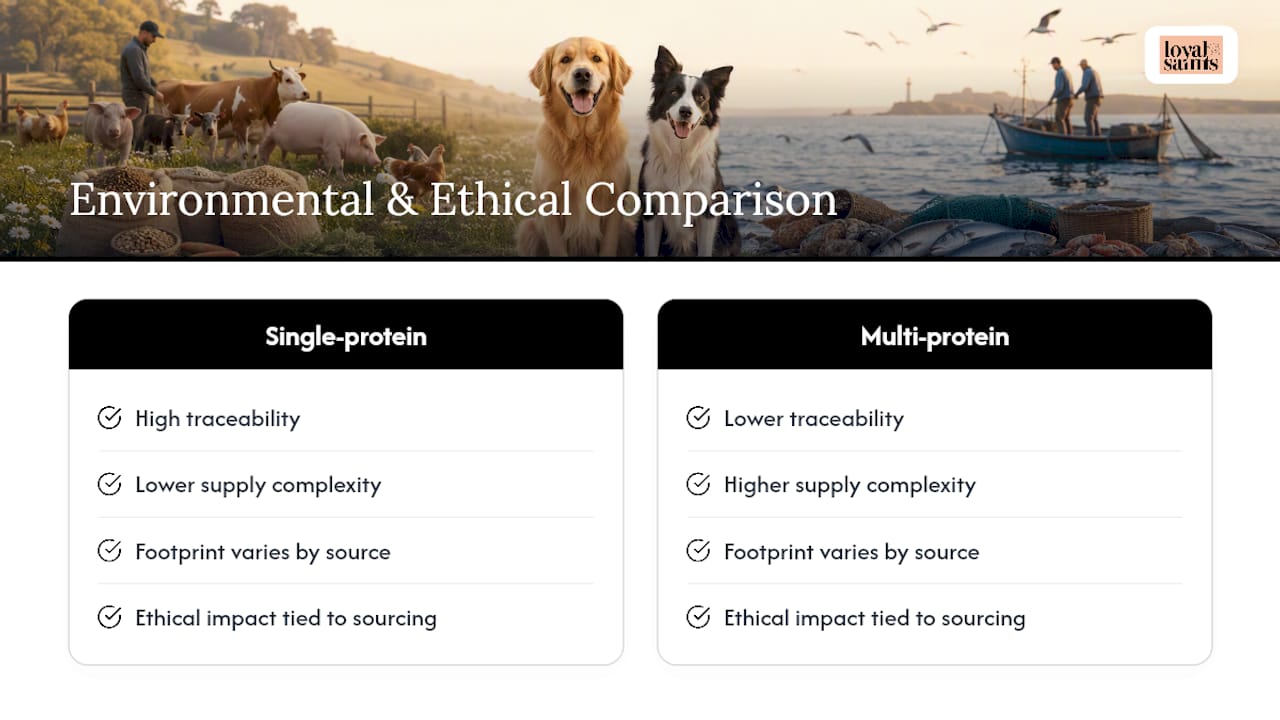
Single-protein and multi-protein diets carry different footprints, and the differences are worth weighing alongside your dog’s health needs. A single-protein diet built around one consistent source, say, beef, tends to create predictable, traceable sourcing. You know exactly what you’re feeding and can vet that one supply chain more thoroughly than a blend of three or four.
Multi-protein diets spread demand across several species, which some owners see as a hedge against over-relying on any one type of livestock or fishery. Whether that’s a meaningful ethical advantage depends heavily on how each protein was raised or caught, not simply on how many proteins are in the bag. A grass-fed, single-source beef diet from a transparent supplier can have a lighter footprint than a multi-protein formula sourced from industrial operations with no traceability.
Ingredient transparency plays into this too. Brands that name their protein source clearly, rather than hiding behind “meat meal” or “animal digest,” make it easier for owners to make an informed call about sourcing practices that matter to them, whether that’s regenerative farming, wild-caught fish, or humane livestock standards. Freeze-dried processing also tends to generate less packaging waste per serving than heavily processed kibble, since the format concentrates nutrition without needing the same volume of fillers.
There’s no universally “greener” choice between single- and multi-protein. The more honest answer is that sourcing quality and transparency matter more than the protein count on the label.
Cost Comparison: Single-Protein vs Multi-Protein Dog Food
Price differences between single- and multi-protein formulas usually come down to ingredient sourcing, not the format itself. A single-protein diet built around a premium cut, like grass-fed beef, can cost more per pound than a multi-protein formula that blends cheaper proteins to hit the same nutritional targets at a lower price point.
Budget-conscious owners sometimes assume multi-protein automatically means cheaper, but that’s not a reliable rule. What actually drives cost is ingredient quality, processing method, and whether the diet is formulated to meet full AAFCO completeness or cut corners with fillers. A well-formulated single-protein diet and a well-formulated multi-protein diet, made with the same quality standards, often land in a similar price range.
Where cost differences show up more predictably: elimination trials. A strict, vet-guided elimination trial using a prescription hydrolyzed diet typically costs more per pound than an over-the-counter multi-protein formula, but that added cost buys diagnostic reliability you can’t get from guessing your way through grocery-aisle swaps. For maintenance feeding once a trigger is identified, a single-protein freeze-dried diet doesn’t have to cost dramatically more than a multi-protein kibble, especially when portioned correctly for your dog’s Resting Energy Requirement. The real budget question isn’t single versus multi. It’s whether you’re paying for verified quality or for marketing on the bag.
Why We Build Single-Protein Meals the Way We Do
Formulating a diet that’s genuinely useful for elimination trials and everyday maintenance takes more than dropping one protein into a recipe. Every Loyalsaintspets single-protein formula is built to meet full AAFCO completeness, so a dog on a maintenance diet after an elimination trial isn’t trading diagnostic clarity for nutritional gaps. Freeze-drying preserves more of the protein’s original structure than high-heat extrusion, which supports the digestibility questions raised earlier in this piece. You can see how we vet our formulations on our Veterinary & Nutrition Advisory page and learn more about the process on Why Freeze Dried?
— Kristina
Finding the Right Loyal Saints Formula for Your Dog
If your vet has confirmed your dog does well on chicken, our Freeze Dried Raw Chicken — 14oz and 5oz options make maintenance simple without reintroducing variables you already ruled out.
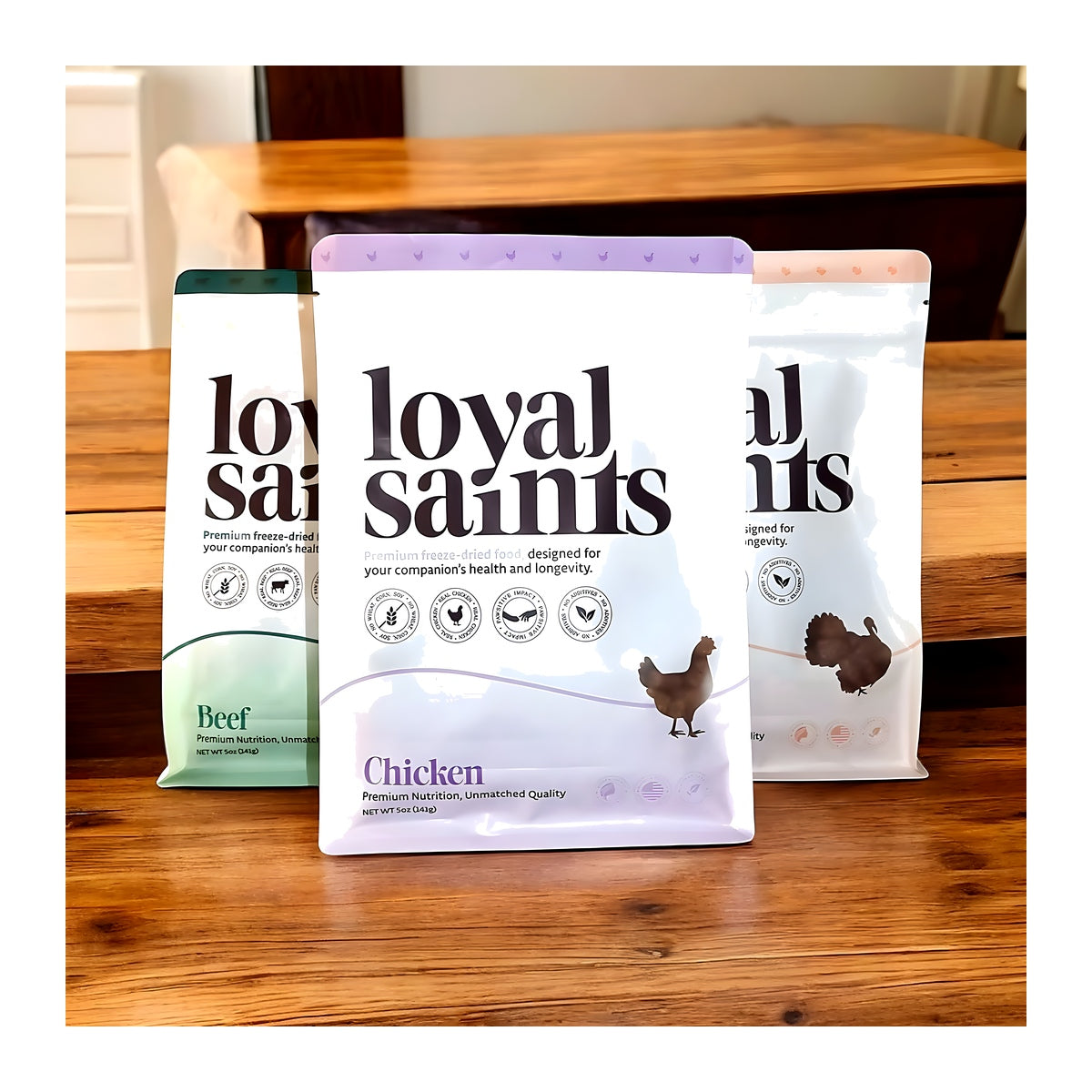
The same goes for beef: the Freeze Dried Raw Beef — 14oz and 5oz formats work as maintenance staples once beef is confirmed safe, and both are freeze-dried to preserve the bioavailable protein structure we talked about earlier. Want variety without guesswork? The Freeze Dried Raw Turkey with Salmon in 14oz and 5oz sizes give sensitive-stomach dogs a second single-protein option to rotate into maintenance feeding. For healthy dogs with no known sensitivities, the Variety Pack — Beef, Chicken & Turkey with Salmon offers controlled rotation across three proteins in one order. Every recipe transitions gradually over 7 to 14 days, and Halo Club members get recurring shipments plus savings built around exactly that kind of maintenance schedule. None of this replaces your vet’s diagnosis. If your dog has a confirmed allergy or a severe reaction history, work with your veterinarian before choosing a formula, and browse the full lineup on our shop page once you know which protein fits.
Key Takeaways
Single-protein diets work best as diagnostic and maintenance tools for sensitive dogs, while multi-protein diets serve most healthy dogs well when formulated to full AAFCO completeness.
| Point | Details |
|---|---|
| Start with symptoms, not preference | Symptomatic dogs benefit from single-protein or vet-guided elimination diets; healthy dogs do fine on multi-protein. |
| Cross-contact is real | Commercial single-protein bags can carry trace proteins from shared lines, so strict diagnosis often needs hydrolyzed diets. |
| Timelines vary by symptom | GI improvement often shows in 1 to 2 weeks; skin and coat issues can take 4 to 6 weeks. |
| Protein amount isn’t protein type | Kidney or liver disease requires vet oversight on protein levels regardless of single- or multi-protein format. |
| Loyal Saints fits both roles | Single-protein SKUs support maintenance once a trigger is known; the Variety Pack suits healthy dogs wanting rotation. |
Sources
- Effects of protein source on digestibility and fecal metabolites — PMC article
- AAFCO
- Implementing an elimination/challenge diet trial — VCA Hospitals
- LID, novel, single, hydrolyzed: which diet do I need? | KibbleLab Explains


