
AAFCO tells you whether a food meets the U.S. baseline for “complete and balanced,” while WSAVA’s guidelines tell you whether the company behind that bag actually has a veterinary nutritionist, testing protocols, and transparent practices backing it up. Neither one certifies or approves a specific product. The smartest move is checking the AAFCO statement on the bag first, then asking WSAVA-style questions about the manufacturer before you commit. Loyalsaintspets builds its freeze-dried recipes to clear both bars.
TL;DR:
- AAFCO’s statement on the bag shows whether the food meets the minimum nutrient levels for specific life stages, but it does not certify the product.
- WSAVA evaluates manufacturer practices such as veterinary nutritionist involvement, testing protocols, sourcing transparency, and safety procedures, not individual formulas.
- A food can meet AAFCO standards while coming from a manufacturer with poor transparency or lacking professional veterinary oversight, highlighting the need for manufacturer scrutiny.
- Checking for a typical nutrient analysis and asking about third-party quality control provides a clearer picture of real product quality and safety.
- Transparency with detailed formulation, testing data, and vet involvement signals a responsible brand beyond just reading the label.
Table of Contents
- What Is WSAVA and Why Does It Matter for Dog Food?
- What Does AAFCO Mean on a Dog Food Label?
- How Do WSAVA and AAFCO Actually Compare?
- How Do You Evaluate a Brand or Bag Step by Step?
- How Loyalsaintspets Builds Around These Standards
- What Actually Matters More: The Label or the Company?
- Ready to Feed a Food That Clears Both Checklists?
- Where to Read More on WSAVA and AAFCO Standards
- Sources
What Is WSAVA and Why Does It Matter for Dog Food?
The World Small Animal Veterinary Association isn’t a regulator, and it doesn’t put a seal on any bag of kibble or freeze-dried food. It’s a global coalition of veterinary professionals, and its Global Nutrition Committee publishes guidance meant to help vets and owners evaluate pet food companies rather than individual formulas. Think of it less as a stamp of approval and more as a set of smart interview questions you’d ask before trusting someone with your dog’s health.
Those questions focus almost entirely on the manufacturer, not the marketing copy on the front of the bag. WSAVA’s toolkit asks veterinarians and pet owners to find out:
- Does the company employ a board-certified veterinary nutritionist, either on staff or as a consultant?
- Where is the food actually manufactured, and does the company own that facility?
- Does the manufacturer run feeding trials, or does it rely solely on nutrient formulation?
- Will the company provide a typical nutrient analysis for the finished product, not just guaranteed analysis minimums?
- What quality-control and safety-testing procedures does the company follow, and will it disclose them?
Here’s what “WSAVA-aligned” actually means in practice: a brand that answers these questions openly, with real names and real data, is behaving the way WSAVA recommends a responsible manufacturer should behave. That’s meaningfully different from a brand slapping “vet recommended” across its packaging with nothing behind it. WSAVA itself is blunt about the limits here, too. Its own guidance on selecting pet food warns that ingredient lists are a poor stand-in for actual quality, because a short, clean-sounding ingredient panel tells you nothing about sourcing, quality control, or whether anyone with nutrition credentials reviewed the formula.
Pro Tip: Email a brand and ask for its typical nutrient analysis, not just the guaranteed analysis printed on the bag. Guaranteed analysis gives you minimums and maximums; typical analysis shows the actual average values, which is far more useful if your dog has allergies or a medical condition your vet is managing.
WSAVA guidance doesn’t carry legal weight in the United States, and no company can honestly claim to be “WSAVA certified” or “WSAVA approved.” That phrase alone is a small red flag, since it suggests a brand doesn’t fully understand what the guidelines are for.
What Does AAFCO Mean on a Dog Food Label?
The Association of American Feed Control Officials sets the nutrient profiles and labeling rules that define “complete and balanced” dog food in the United States. When you see an AAFCO statement on a bag, it’s referencing one of two established nutrient profiles, one for growth and reproduction (puppies, pregnant or nursing dogs) and one for adult maintenance, plus a broader “all life stages” designation that covers both.
AAFCO itself isn’t an enforcement agency. It develops model regulations that individual states then choose to adopt, which means label interpretation is ultimately the owner’s responsibility rather than something a federal inspector verifies bag by bag. That’s exactly why understanding the statement’s phrasing matters more than most owners realize.
There are two distinct ways a manufacturer can substantiate an AAFCO adequacy claim, and they are not interchangeable:
- Formulated to meet AAFCO nutrient profiles: The recipe was calculated on paper (or through lab analysis) to hit the required vitamin, mineral, protein, and fat levels for a given life stage. No dogs were necessarily fed the finished product to confirm real-world performance.
- Animal feeding tests using AAFCO procedures: The finished food was actually fed to a group of dogs for a defined trial period, and their health markers were tracked to confirm the food supports that life stage.
Both routes are legitimate under AAFCO rules, but they answer different questions. Feeding trials confirm short-term nutritional adequacy in a real dog’s body, though the trial groups tend to be small and the durations are brief compared to a dog’s actual lifespan. Formulation confirms the math checks out but skips the live-animal step entirely.
Read the label closely and you’ll usually find phrasing like “animal feeding tests using AAFCO procedures substantiate that [product] provides complete and balanced nutrition for adult maintenance,” or the shorter “formulated to meet the nutritional levels established by the AAFCO Dog Food Nutrient Profiles.” Those two sentences look similar at a glance, but they’re telling you very different things about how the claim was proven.
How Do WSAVA and AAFCO Actually Compare?
The core distinction comes down to scope. AAFCO evaluates the nutrient content of a formula; WSAVA evaluates the practices of the company making it. One is a chemistry and labeling standard, the other is a professional-conduct framework. You need both lenses to get a full picture of a bag of food, because a formula can be technically complete and balanced under AAFCO’s numbers while still coming from a manufacturer with no nutritionist on staff and no willingness to share testing data.
| Factor | AAFCO | WSAVA |
|---|---|---|
| What it evaluates | Nutrient content and label claims | Manufacturer practices and transparency |
| Legal status | Model regulations adopted by states | Voluntary professional guidance |
| Proof required | Formulation math or feeding trial | Self-reported answers to evaluation questions |
| Certifies products? | No | No |
| Best for | Confirming basic life-stage adequacy | Vetting a company’s long-term reliability |
WSAVA-style scrutiny matters most when the stakes are higher than routine maintenance feeding. If your dog has a diagnosed allergy, a kidney or liver condition, or you’re managing a specialty diet under veterinary direction, you want to know who formulated that food and whether a board-certified nutritionist actually reviewed it. For a healthy adult dog eating a mainstream complete-and-balanced formula, the AAFCO statement alone usually covers the basics.
Neither organization certifies or approves specific products, full stop. WSAVA and AAFCO materials both state this explicitly, which means any packaging claiming “AAFCO approved” or “WSAVA certified” is using language neither body actually issues. That’s why transparency from the manufacturer itself carries so much weight. A company willing to publish its typical nutrient analysis, name its nutritionist, and disclose its manufacturing location is doing the work that neither regulatory body is positioned to verify for you.
How Do You Evaluate a Brand or Bag Step by Step?
Run through this sequence the next time you’re standing in the pet food aisle or scrolling a brand’s website, and you’ll cover both the AAFCO baseline and the WSAVA-style depth check in about five minutes.
- Find the AAFCO statement. It’s usually printed near the guaranteed analysis or ingredient list on the back panel. No statement at all is a genuine warning sign.
- Confirm the life stage. Match “growth and reproduction,” “adult maintenance,” or “all life stages” to your dog’s actual age and condition rather than assuming any bag works for any dog.
- Check whether it’s formulation or feeding trial. Look for the specific wording described earlier. Neither is automatically wrong, but a feeding trial adds a layer of real-world confirmation.
- Ask about veterinary or nutritionist involvement. A quick email to the company asking whether a board-certified veterinary nutritionist formulated or reviewed the recipe tells you a lot about how seriously they take the science.
- Request the typical nutrient analysis. This is different from the guaranteed analysis on the bag and gives you real average values, which matters if you’re tracking calories or managing a medical condition.
- Ask about third-party quality control. Independent lab testing, published digestibility or metabolizable energy data, and clear sourcing information all signal a company willing to be checked.
Pro Tip: Keep your request simple: “Can you share your typical nutrient analysis for [specific product], and let me know whether a board-certified veterinary nutritionist was involved in formulating it?” Most transparent companies will answer within a day or two. If a company goes silent or dodges the question, that tells you something too.
This checklist matters because calorie counts alone can mislead you. Calculated energy estimates using the modified Atwater method can drift from the food’s actual metabolizable energy once it’s tested in real digestion studies, so brands willing to publish tested data instead of relying purely on formula math are giving you a more accurate feeding picture.
Loyalsaintspets’ freeze-dried recipes are formulated to meet AAFCO nutrient profiles for the labeled life stage, made from human-grade proteins, fruits, and vegetables with no fillers or synthetic additives. Details on how the company approaches veterinary review and sourcing transparency are covered on its veterinary and nutrition advisory page, and you can dig deeper into the AAFCO side of this checklist in this breakdown of AAFCO standards for premium pet nutrition.
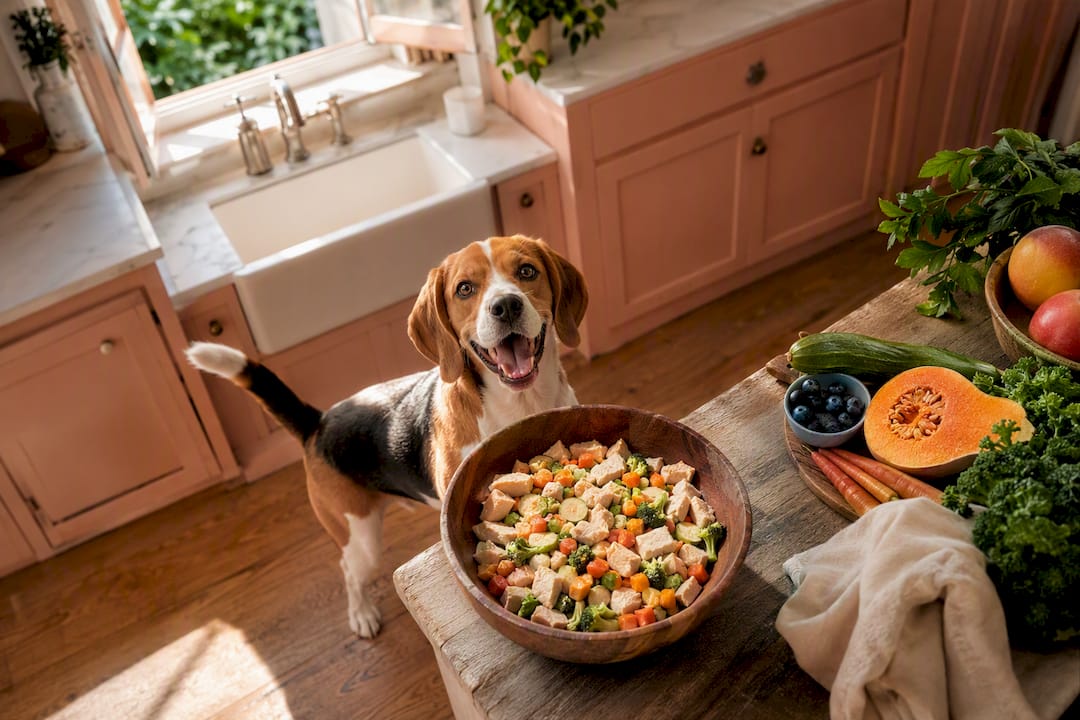
How Loyalsaintspets Builds Around These Standards
We didn’t build our freeze-dried recipes around what sounds good on packaging. We built them around the two checklists that actually matter: what AAFCO requires on the label, and what WSAVA recommends you ask about the company behind it.
Every recipe we ship is formulated to meet AAFCO nutrient profiles for its labeled life stage, made from human-grade whole ingredients with no fillers or synthetic additives. We involve veterinary and nutrition advisory expertise in how our recipes come together, and we believe owners deserve straight answers about sourcing and manufacturing, not vague marketing language.
That’s the standard we hold every batch to, whether it’s our chicken, beef, or turkey with salmon recipes. Freeze-drying itself is part of the transparency story too. Because it preserves nutrients without the high heat that some traditional processing methods use, what you see in the ingredient list is closer to what actually ends up in the bowl.
If you want specifics on our sourcing, formulation process, or veterinary involvement, our advisory page has the details, and we’re always glad to answer direct questions the same way we’d want a brand to answer ours.
What Actually Matters More: The Label or the Company?
The honest answer is that most owners spend all their attention on the wrong sentence. They read the guaranteed analysis, maybe check the crude protein percentage, and call it done. But the guaranteed analysis is the least informative number on the bag. The AAFCO adequacy statement, tucked in small print near the bottom, tells you far more, and almost nobody reads it closely enough to notice whether it says “formulated” or “feeding trial.”

Where conventional advice falls short is treating AAFCO and WSAVA as competing systems, or worse, treating either one as a seal of quality you can trust blindly. They’re not competitors. AAFCO is the floor. WSAVA is the flashlight you use to see who built that floor and how carefully. A food can clear the AAFCO bar and still come from a company that won’t answer a basic email about its nutritionist.
If you take one thing from this comparison, prioritize transparency over marketing language every time. A brand willing to show its work, on formulation, sourcing, and testing, is telling you more than any front-of-bag claim ever will.
— Kristina
Ready to Feed a Food That Clears Both Checklists?
You’ve got the checklist now: AAFCO statement, life stage, formulation versus feeding trial, veterinary involvement, and real transparency from the manufacturer. Loyalsaintspets was built to clear every one of those checks without asking you to take our word for it. Our recipes are formulated to meet AAFCO nutrient profiles, made from human-grade ingredients, and backed by veterinary and nutrition advisory input from the start.
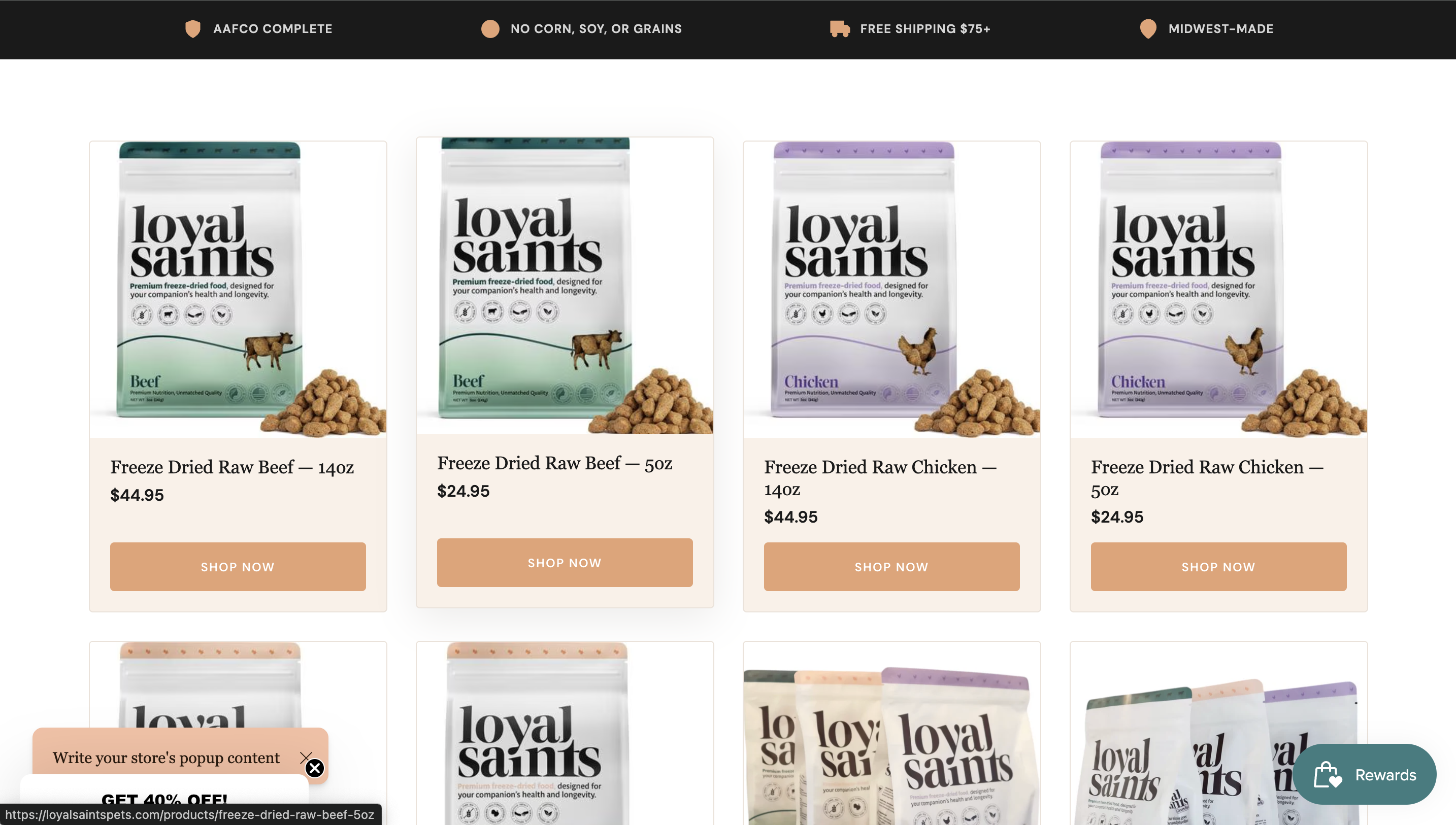
- AAFCO statement: every recipe carries a clear adequacy statement for its labeled life stage.
- Ingredient quality: human-grade proteins, fruits, and vegetables, with no fillers or synthetic additives.
- Freeze-dried freshness: nutrients preserved without high-heat processing, so what’s on the label matches what’s in the bowl.
- Veterinary input: formulation guided by veterinary and nutrition advisory expertise, detailed on our advisory page.
If you’re ready to see it for yourself, start with our freeze-dried raw chicken, or try the variety pack with beef, chicken, and turkey with salmon if your dog likes options. Curious why freeze-drying matters in the first place? Read why freeze-dried before you decide which recipe to start with.
Where to Read More on WSAVA and AAFCO Standards
For primary guidance straight from the source, review WSAVA’s Global Nutrition Guidelines and AAFCO’s label-reading resources. For a deeper dive into manufacturer quality control practices, see this breakdown of quality control in dog food manufacturing, and check our own guide to WSAVA dog food guidelines for U.S. owners.
Sources
- Nutrition - WSAVA
- Reading labels - AAFCO
- Understanding AAFCO and WSAVA Guidelines | DogFoodDB
- Frontiers in Animal Science article on pet food energy/bioavailability


