
For most dogs, premium pet food is worth the investment when it delivers named animal proteins, transparent sourcing, and rigorous quality control. But “premium” is a marketing term with no legal definition in the United States, so price alone tells you very little. A Journal of Animal Science 2023 study found that dogs fed premium dry food for 180 days showed lower liver enzyme concentrations and a healthier gut microbiome compared to dogs on standard grocery diets. That is meaningful. What is not meaningful is a fancy bag with blueberries listed as the third ingredient.
Here is what actually signals a worthwhile premium food:
- Named animal protein (chicken, beef, salmon) as the first ingredient, not “meat and animal derivatives”
- An AAFCO “complete and balanced” statement verified through feeding trials, not just nutrient profiling
- A manufacturer with boarded veterinary nutritionists on staff and transparent quality control practices
- Natural preservatives rather than synthetic additives
- No reliance on vague fillers or unnamed protein concentrates to inflate the crude protein percentage
The bottom line: premium pet food can genuinely benefit your dog, but only when the price reflects real ingredient quality and manufacturing rigor, not clever packaging.
How premium and regular pet food actually differ
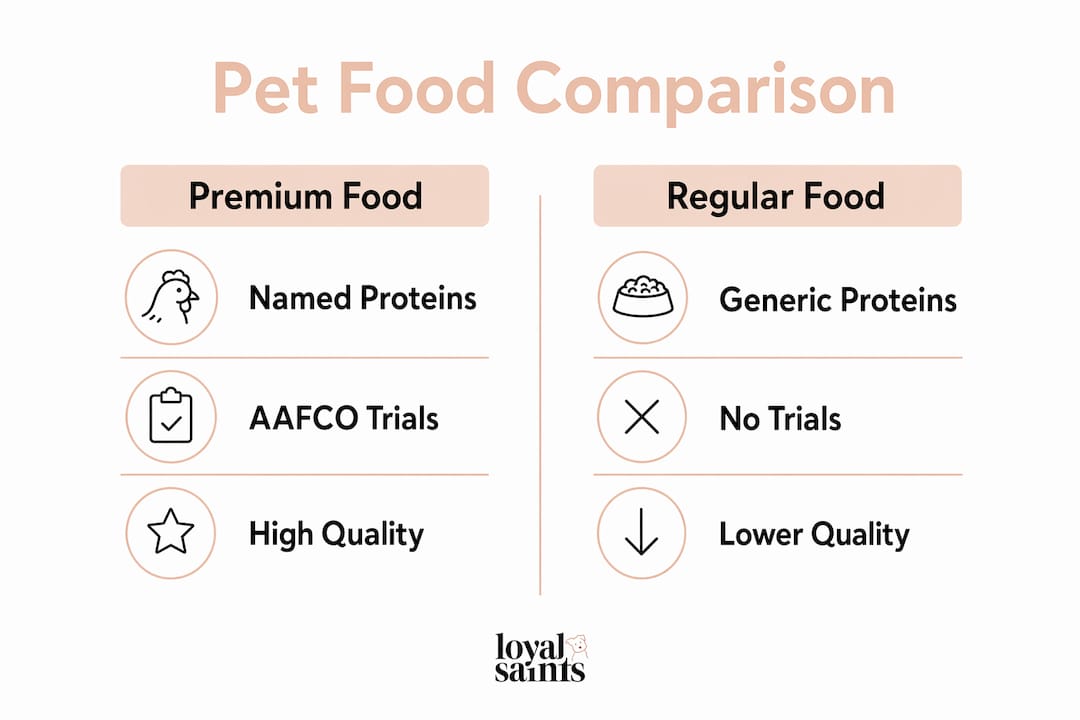
The gap between premium and regular pet food comes down to three things: ingredient sourcing, manufacturing standards, and transparency. Regular grocery-store foods often list “meat and animal derivatives” or “cereal by-products” without specifying the source, which makes it impossible to evaluate what your dog is actually eating. Premium foods, at their best, name every protein and carbohydrate source with clear percentages.

Every commercial pet food sold in the United States must meet AAFCO nutritional adequacy standards to carry a “complete and balanced” label. That means even budget grocery-store kibble should maintain your dog’s basic health if used appropriately. The difference with genuinely high-quality foods shows up in what goes beyond the minimums: higher digestibility, richer animal protein content, better fat sources like fish oil, and more careful nutrient ratios.
The WSAVA guidelines add another layer of evaluation, recommending that pet owners look for manufacturers who employ full-time veterinary nutritionists, conduct AAFCO feeding trials, and publish their nutritional research. Not every brand calling itself premium meets those criteria.
Here is how the two categories typically compare:
- Premium: Named meats or fish as first ingredients, natural preservatives, clear ingredient percentages, higher protein from animal sources, gentler or more controlled processing methods
- Regular: Vague protein sources, synthetic preservatives, heavier reliance on grain by-products and plant protein concentrates, minimal quality control transparency
- Both: Must meet AAFCO minimum nutrient requirements to carry a “complete and balanced” claim
Pro Tip: Flip the bag and read the first five ingredients. If you cannot identify the protein source by species and cut, the food is probably not earning its price.
What the marketing does not tell you about premium pet food pricing
“Premium” has no regulated definition from the FDA or AAFCO. Any manufacturer can print it on a bag regardless of what is inside. The premium pet food market grew from 44% of total pet food sales in 2001 to 61% by 2015, which reflects consumer spending trends, not a documented improvement in pet health outcomes.
Several buzzwords drive price without driving nutrition:
- “Grain free”: Scientific consensus supports grains as healthy carbohydrate sources for most dogs. Grain-free formulas often substitute potatoes or legumes, which are not inherently superior and may carry their own concerns.
- “Human-grade”: A meaningful term when it refers to ingredients processed in USDA-inspected facilities, but often used loosely without that substantiation.
- “Probiotics included”: One study found that many pet foods listing probiotics on the label contained no live bacteria at all. No scientific proof currently confirms that probiotics in dry pet food improve pet health.
- Superfood additions: Small amounts of blueberries, kale, or quinoa add marketing appeal but rarely contribute nutrients your dog could not get from less expensive sources.
Some brands invest more in packaging design and branding than in the actual recipe. A 2025 meta-analysis of 121 studies found no evidence that approved additives or preservatives cause harm within AAFCO limits, which means the “no additives” marketing angle is often solving a problem that does not exist.
Pro Tip: Search the manufacturer’s website for their nutritionist team and feeding trial history. If that information is not publicly listed, treat the premium label with skepticism.
When paying more for pet food actually makes sense
Premium pricing is justified in specific situations, and those situations are worth knowing before you spend. The key question is whether the higher cost reflects real ingredient quality, clinical research, or a processing method that genuinely benefits your dog.
- Sensitive stomachs or food allergies: Dogs with reactions to common proteins need simple, clearly named ingredients. A food listing “chicken” with a percentage is far easier to manage than one listing “poultry derivatives.”
- Specific health conditions: Veterinary therapeutic diets command higher prices because they are backed by clinical research, feeding trials, and specialist nutritionist involvement. For dogs with kidney disease, urinary conditions, or severe gastrointestinal issues, these diets often outperform any over-the-counter premium option.
- Gentler processing methods: Freeze-dried, cold-pressed, and air-dried formats preserve more nutrients than high-heat extrusion. If your dog thrives on minimally processed food, the price difference can reflect a real production cost, not just marketing.
- Puppies and senior dogs: Life-stage-specific formulas with precise nutrient ratios matter more at growth and aging stages than during healthy adult maintenance.
- Dogs already thriving on affordable food: If your dog has good stool quality, healthy weight, a shiny coat, and your vet is satisfied, upgrading to a pricier bag may not add anything.
The guidance from Tufts University veterinary nutrition experts is direct: choose the best food within your budget that meets evidence-based quality standards, and do not let marketing pressure you into spending beyond what your pet actually needs. You can explore the real benefits of premium dog food to see which situations genuinely call for an upgrade.
What the science actually says about high-quality pet food
The research on premium pet food is more nuanced than most marketing suggests, but there are real findings worth knowing.
The 2023 Journal of Animal Science study with 60 healthy adult dogs over 180 days is one of the most cited comparisons available. Dogs on the premium diet showed lower concentrations of liver enzymes including alanine transaminase, alkaline phosphatase, and gamma-glutamyl transpeptidase, along with a lower dysbiosis index, meaning a healthier gut microbiome. Greater abundances of beneficial bacteria including Bifidobacterium and Megamonas were observed in the premium group.
The 2025 systematic review of 121 studies adds important context: processing effects on digestibility and nutrient content vary substantially by ingredient type and method, not simply by how “processed” a food appears. Both beneficial and detrimental outcomes were observed depending on the specific ingredient and technique. Human-grade versus feed-grade comparisons showed methodological limitations, preventing definitive conclusions.
WSAVA-aligned quality metrics that veterinary nutritionists actually use include AAFCO feeding trial substantiation, full-time nutritionist staff, published research, and transparent manufacturing. Boutique or expensive brands that skip these steps may charge more while delivering less clinical confidence than mainstream brands with stronger track records.
Potential drawbacks and risks of premium pet food
Premium pet food is not risk-free, and a few situations call for real caution. Switching foods too quickly, regardless of quality, commonly causes digestive upset including loose stools, gas, and vomiting. A gradual transition over 7–10 days, mixing increasing amounts of the new food with the old, reduces that risk considerably.
Allergies are another concern. Some premium formulas use novel proteins like venison, duck, or kangaroo to appeal to health-conscious owners, but those same proteins can trigger reactions in dogs with sensitivities. A food being “premium” does not make it hypoallergenic. If your dog develops itching, ear infections, or digestive issues after switching, the new food may be the cause regardless of its price point.
Grain-free premium diets carry an additional flag worth discussing with your vet. Ongoing research has examined a possible link between certain grain-free formulas high in legumes and dilated cardiomyopathy in dogs. The science is not settled, but the FDA has been investigating the connection since 2018, and veterinary cardiologists have flagged it as a reason to consult your vet before choosing a grain-free option for long-term feeding.
Finally, calorie density in premium foods tends to be higher. A dog eating the same volume of a richer food can gain weight quickly if portions are not adjusted. Always follow feeding guidelines by weight and activity level, and check in with your vet if your dog’s body condition changes after a food switch.
How premium pet food compares to homemade and raw diets
Premium commercial pet food sits in the middle of a broader spectrum of feeding options, each with real trade-offs. Understanding where it stands helps you make a genuinely informed choice.
Homemade diets give you complete control over ingredients, which appeals to owners managing severe allergies or specific health conditions. The challenge is nutritional completeness. Studies consistently show that most homemade dog food recipes, even those from veterinary websites, fail to meet all AAFCO minimum nutrient requirements without careful supplementation. Getting the calcium-to-phosphorus ratio right alone requires more precision than most home cooks can reliably achieve. A board-certified veterinary nutritionist can formulate a balanced homemade recipe, but that consultation adds cost.
Raw diets, both commercial and home-prepared, are popular among owners who prioritize minimal processing. The appeal is real: raw feeding preserves heat-sensitive nutrients and enzymes. The risks are also real. The FDA and the American Veterinary Medical Association both caution against raw meat diets due to bacterial contamination risks, including Salmonella and Listeria, which can affect both pets and the humans handling the food. Among veterinary professionals surveyed in one study, 85.9% did not consider raw meat diets healthier than commercial pet foods.
Freeze-dried raw food bridges the gap in a meaningful way. The freeze-drying process removes moisture without high heat, preserving nutrients and reducing bacterial risk compared to fresh raw feeding. It meets AAFCO standards when formulated correctly, and the convenience factor is far higher than home-prepared raw. For owners who want the benefits of minimal processing without the food safety concerns of fresh raw, freeze-dried is often the most practical choice. You can see how that approach works in practice with options like freeze-dried raw beef from Loyalsaintspets, which uses human-grade whole ingredients with no fillers or synthetic additives.
The honest comparison: a well-formulated premium commercial food beats a poorly balanced homemade diet every time. And a freeze-dried option with transparent sourcing and AAFCO compliance often outperforms both standard kibble and the risks of fresh raw feeding for most dog owners.
Key Takeaways
Premium pet food is worth the investment when it delivers named proteins, AAFCO feeding trial substantiation, and transparent manufacturing, not simply a higher price tag or trendy ingredients.
| Point | Details |
|---|---|
| “Premium” is unregulated | No FDA or AAFCO standard defines the term; any brand can use it regardless of ingredient quality. |
| Science supports real benefits | A 180-day study with 60 dogs showed lower liver enzyme levels and a healthier gut microbiome in the premium food group. |
| Marketing buzzwords mislead | Grain-free, probiotic, and superfood claims often lack scientific backing and inflate cost without improving nutrition. |
| Justified premium situations | Dogs with allergies, health conditions, or life-stage-specific needs often benefit most from genuinely higher-quality formulas. |
| Freeze-dried offers a practical middle ground | Minimal processing preserves nutrients and reduces raw feeding risks while meeting AAFCO standards. |
Give your dog food that actually earns the price
Loyalsaintspets formulates every product around human-grade whole ingredients, named proteins, and AAFCO-compliant nutrition. No fillers, no synthetic additives, and no marketing fluff. If you are ready to feed your dog something that genuinely reflects the care you have for them, start with the freeze-dried raw turkey with salmon for a nutrient-rich protein blend, or try the freeze-dried raw beef 5oz as a lower-commitment first step. Free shipping is available on qualifying orders. Your dog’s next meal can be one you feel genuinely good about. Learn more about why premium pet foods make a difference when they are built around real ingredients.
Recommended
- The Essential Guide to Why Choose Premium Pet Foods | The Loved by Loyal Saints Blog
- What Is Premium Pet Food? A Dog Owner’s Guide | The Loved by Loyal Saints Blog
- Premium Dog Food Standards: What Really Matters in 2026 | The Loved by Loyal Saints Blog
- Complete Guide to What Makes Dog Food Premium | The Loved by Loyal Saints Blog


