
Yes, dog food can go rancid, and the fat in it is the reason. Fats break down when they meet air, heat, light and moisture, and once that chemical change happens it cannot be undone. The good news is that you can catch it by smell and color, and you can slow it a lot with a few storage habits. If you are choosing a food with this in mind, our freeze-dried raw recipes are shelf-stable, so there is no fridge, thawing or ice packs to manage.
TL;DR
- Rancidity is spoilage of fats and oils through oxidation. Texas A&M’s veterinary school describes it as a chemical change that causes unpleasant smells and flavors.
- Trust your nose and eyes: if the smell or color differs from the last bag, stop feeding it and contact the company.
- Heat, light, air and moisture speed it up. Keep food in its original bag, in a cool, dry place, ideally under 80°F.
- Oxidized fat can upset a dog’s stomach and cause diarrhea. If your dog seems unwell after eating suspect food, call your vet.
- Once fat is rancid, nothing fixes it. Throw the food out and report the problem.
Table of Contents
- What “rancid” actually means
- Which foods are most at risk
- How to tell if dog food is rancid
- What rancid fat can do to your dog
- What to do if you think food is rancid
- Storing dog food so the fat stays fresh
- Where freeze-dried food fits
- Try Loyal Saints freeze-dried raw
- FAQ
- Sources
What “rancid” actually means
Fat is the most concentrated energy source in a dog’s diet. It also supplies essential fatty acids the body cannot make and carries fat-soluble vitamins, according to the National Academies’ guide to dogs’ nutritional needs, which says roughly 5.5% of a dog’s diet should come from fat. So fat is not the villain. Fresh fat is something your dog needs, and it even adds to the flavor of the food.
The trouble starts when the fat degrades. Pet Food Processing explains that fatty acids can react in three ways:
- Oxidative rancidity: the fat reacts with oxygen. This is the one that matters most for the bag in your pantry.
- Hydrolytic rancidity: the fat reacts with moisture, without air.
- Microbial rancidity: bacteria, mold or yeast enzymes break the fat down.
Heat, light, water and metal ions all speed things up. Fats with more polyunsaturated fatty acids go rancid faster, and fish oil is a well-known example. A white paper on oxidation in pet food notes that a fatty acid with three double bonds oxidizes about 77 times faster than one with a single bond, and DHA, a fish-oil fat, about 400 times faster.
One point worth knowing: you cannot reverse it. An industry expert quoted by Pet Food Processing says fat breakdown can only be slowed, never repaired, and the off flavors and odors that form stay in the food.
Which foods are most at risk
Any food with fat can go rancid, but some conditions raise the odds. According to Pet Food Processing, heat-processed products that are not refrigerated are the most susceptible to oxidative rancidity, and lipid oxidation problems are most common in dry pet food. Frozen and canned foods fare better because cold slows the chemistry down. The AKC adds that dry food exposed to air over time oxidizes, and diets high in unsaturated fat, such as those with fish oil, are more sensitive.
The same pattern shows up in treats. Jerky-style snacks and dried foods with a lot of exposed surface are the most affected, so the open bag of treats at the back of the cupboard deserves as much attention as the main food.
Eurofins, a food-testing lab, points out that ingredients with more than about 2 to 5% fat, such as oils, tallows and raw meats, are the ones at risk. That is a useful reminder that a rich, meat-forward food is only as good as its freshness, which is why packaging and storage matter so much.
How to tell if dog food is rancid
There is no home lab test, but you have two reliable tools. Dr. Katie Tolbert of Texas A&M says the color and smell test are what pet parents have most readily available. If the color or smell is different from previous batches, do not feed it, and contact the company right away.
Food-science references describe the smell of rancid fat as heavy and aromatic, sometimes painty, like varnish, or fishy. Eurofins lists off odors and soapy or bitter flavors. The odor comes from compounds called aldehydes and ketones, which form as fat degrades, according to Whole Dog Journal.
Here is a quick check to run when you open a bag or pouch:
- Smell it first. Fresh food smells like its ingredients. Sharp, sour, paint-like, fishy-in-a-stale-way or “old oil” smells are a warning.
- Look at the color. Compare it with the last bag. A noticeable change is a reason to stop.
- Check the date. Look at the “best by” date and the lot number on the original packaging.
- Notice your dog. A dog who suddenly sniffs and walks away from a food they normally love may be telling you something. Dogs can detect these smells.
- Look for mold. Visible fuzz or clumps point to moisture and microbial growth, a different spoilage problem. The action is the same: do not feed it.
And one caution that matters. Rancidity is not always loud. A veterinary nutrition expert quoted by Rover says food past its expiration is at greater risk of vitamin loss and rancid fat even when it looks and smells fine, which is why feeding past the date is not recommended.
What rancid fat can do to your dog
It helps to keep this in proportion. Most dogs who eat a little slightly stale food have a mild upset at worst. But oxidation is not harmless, and there are reasons to take it seriously.
According to Dr. Jennifer Larsen at UC Davis, quoted by the AKC, fat oxidation damages essential fatty acids and can cause gastrointestinal problems. Oxidation products upset the gut’s bacteria, and some are considered toxic and can cause diarrhea. Whole Dog Journal adds that rancid fats also reduce the nutritive value of protein and degrade vitamins and antioxidants.
Spoiled food can also carry toxins from bacteria or mold. Dr. Tolbert explains that vomiting or diarrhea may signal mild food poisoning, but it can progress to life-threatening signs such as kidney or liver failure. There is no specific antidote for most food-borne illnesses, so vets treat with supportive care: anti-nausea medication, fluids, and a slow return to a highly digestible diet.
When to call your vet: if your dog has eaten food you suspect is spoiled and has vomiting, diarrhea, lethargy or refuses to eat, call your veterinarian promptly. Small dogs, puppies, seniors and dogs with health conditions deserve a call even sooner. Keep the packaging so you can give them the lot number and date.
What to do if you think food is rancid
Do not try to rescue it by mixing it with fresh food or adding toppers. The damage is chemical and it stays. Follow the FDA’s guidance instead:
- Stop feeding it and keep the original package with the UPC, lot number and “best by” date.
- Dispose of the food where your dog and other animals cannot reach it.
- Report the problem, such as a foul odor or a sick pet, to both the FDA and the manufacturer.
- Call your vet if your dog shows any symptoms.
The lot number matters more than most people realize. The FDA says fewer than half of the pet food complaints it receives include one, yet it tells the agency when and where a product was made and speeds up the response to a problem with a specific product.
Storing dog food so the fat stays fresh
Storage is where you have the most control. The advice from the major veterinary sources lines up well.
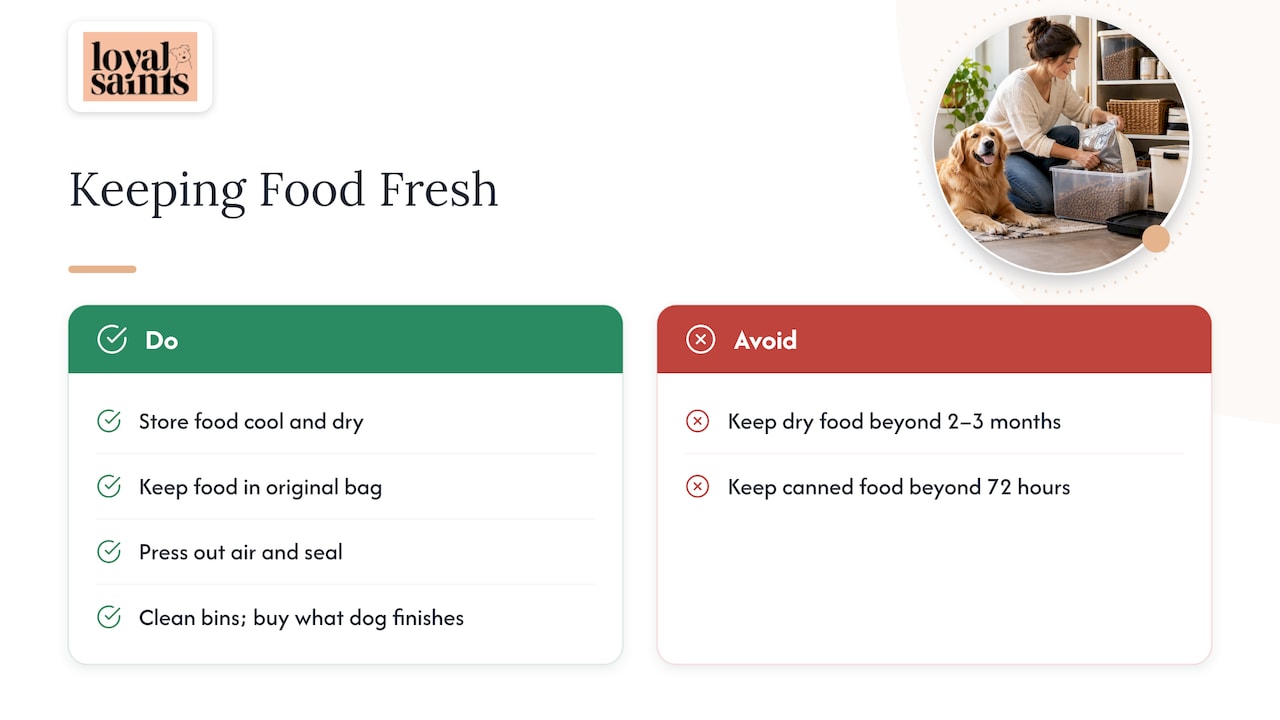
Keep it cool and dry. The FDA recommends storing dry food and unopened canned food in a cool, dry place below 80°F. Tufts University’s nutrition team, in its guide to storing pet food, says high heat or humidity lets fats go rancid and nutrients break down. A hot garage or a sunny windowsill is a poor choice.
Keep it in the original bag. Tufts notes that the bag keeps the UPC and best-by date handy in the event of a recall. Dr. Larsen adds that manufacturers design bags to limit fat migration and oxidation, and that air and light are “definitely the enemies.” If you want an extra container, seal the bag first and place the whole bag inside, as the AKC suggests.
Close it every time. Press out the air and use a clip. Less air means less oxidation.
Use opened food on a schedule. Tufts recommends using opened dry food within two to three months, and says foods rich in fish oil usually have a shorter shelf life. Open canned food belongs covered in the fridge for up to 72 hours, per Texas A&M.
Clean any container. If you do use a plastic bin, wash it regularly. Texas A&M warns that dust mites and other contaminants can build up in it.
Buy what you will finish. The simplest way to avoid old fat is to avoid keeping food around too long. Smaller bags or a steady delivery rhythm beat a giant bag that takes half a year to finish.
Where freeze-dried food fits
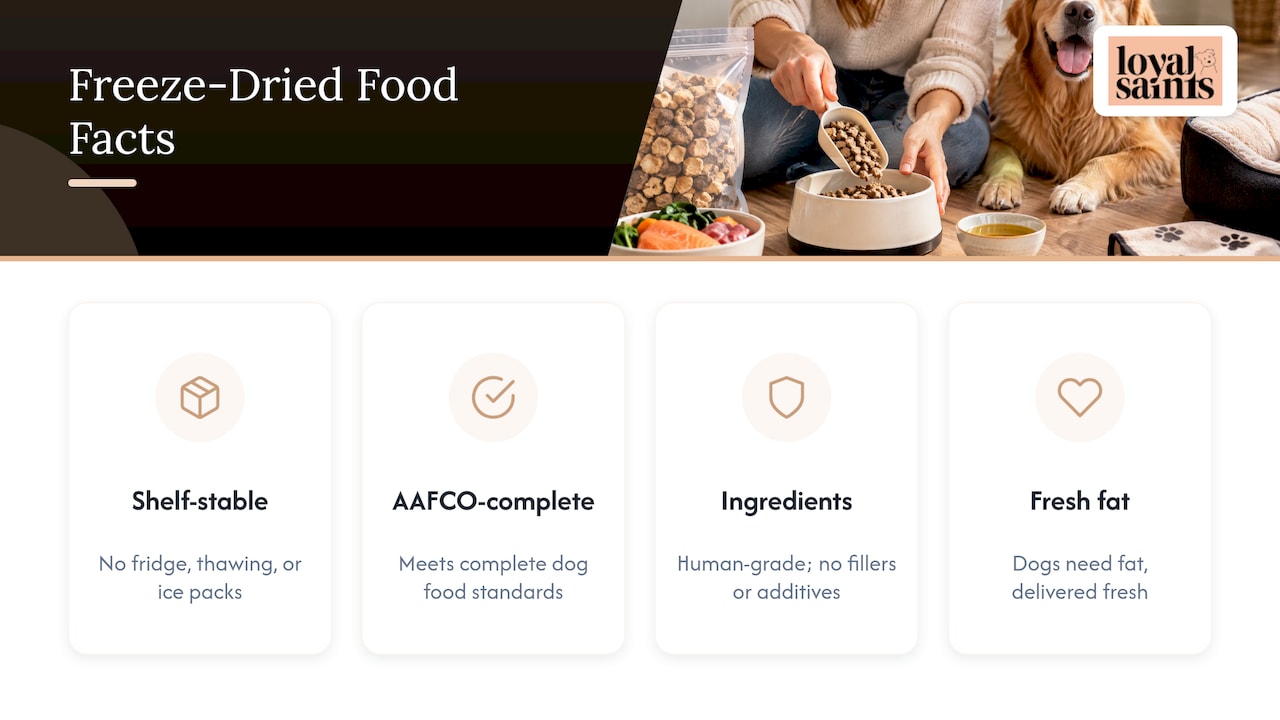
A lot of rancidity worry comes down to refrigeration, open bags and long pantry time. Our freeze-dried raw recipes are shelf-stable, so you do not need a fridge, thawing or ice packs, and they are made with human-grade, whole ingredients and no fillers or synthetic additives. They are AAFCO-complete, which means the formulas are designed to meet the nutritional standards set for complete dog food.
We offer storage guides written for exactly this situation: how to store freeze-dried dog food safely, storing it for longevity, and long-term dog food storage. If you are curious about how our pouches are made, see our overview of freeze-dried packaging safety standards. And if you give your dog fish oil on top of meals, our guide to fish oils for dogs is a good place to start, since fish oils are among the most oxidation-sensitive fats.
Our view on fresh fat
We started Loyal Saints as dog moms who wanted food we felt good about handing over at dinner time. Fat quality is a big part of that. Dogs need fat, so the goal is never to avoid it but to deliver it fresh.
That is why we build our recipes from human-grade whole ingredients, with single or limited proteins, fruits and vegetables, and why we like a shelf-stable freeze-dried format. You open a pouch, you scoop, and there is nothing to thaw or keep chilled between meals.
Our advice is simple: smell your dog’s food, know the date on the bag, keep it cool and closed, and feed what you will finish. A dog who loves mealtime is one tail wag away from telling you you got it right.
Kristina
Try Loyal Saints freeze-dried raw
If you want a food that stores without a fridge, our freeze-dried raw dog food comes in Beef, Chicken, and Turkey + Salmon, with one-time prices from $24.95 to $44.95 depending on size. Our Halo Club membership is $79.99 per year or $10.99 per month, with savings and free shipping. Without a membership, standard shipping is $7.99 and express is $14.99, listed on our shipping page. See the Halo Club details to choose a plan.
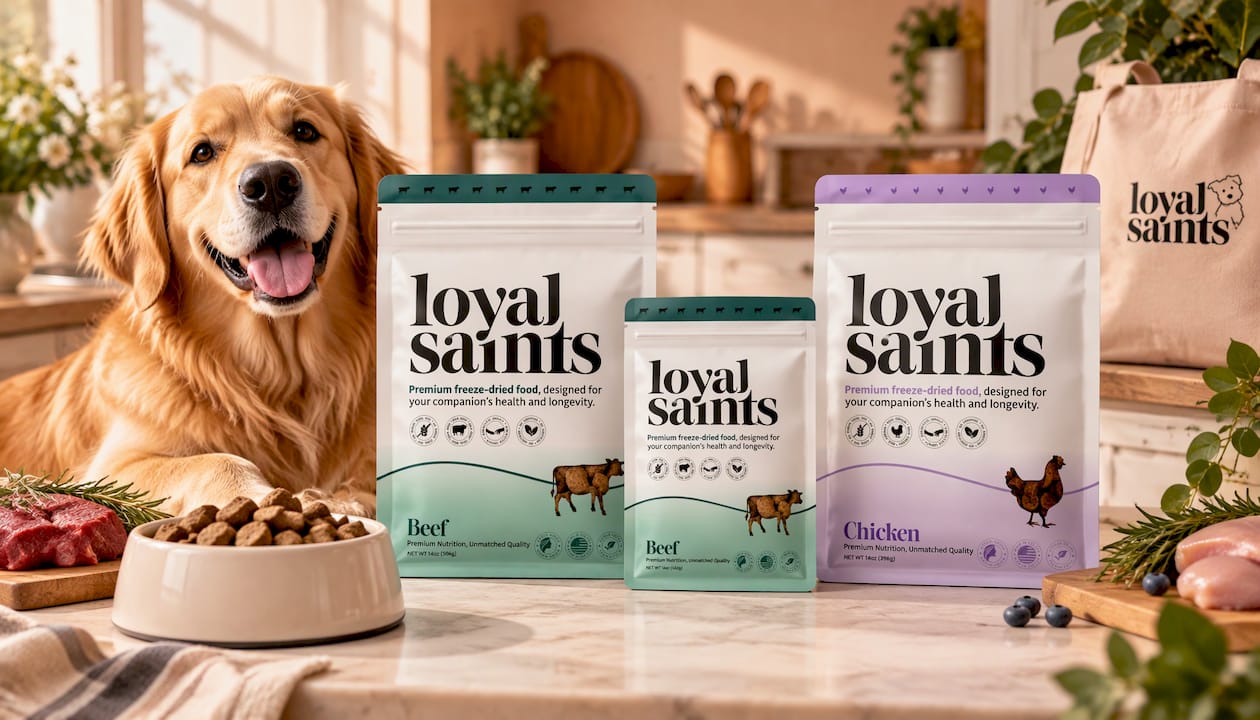
If you are starting with a small bag, the Beef 5 oz is an easy way to begin, and the Chicken 14 oz suits a regular routine.
FAQ
Does dog food go rancid?
Yes. Any food that contains fat can go rancid, and dry foods and jerky-style snacks are among the most affected. Heat, light, air and moisture speed it up, and once the fat has oxidized it cannot be reversed. Storing food cool, dry and sealed slows the process.
Can dogs eat food with oil in it?
Yes. Fat is a necessary part of a dog’s diet, providing energy, essential fatty acids and help absorbing fat-soluble vitamins, per the National Academies. The difference is freshness: fresh oil is nourishing, while oxidized oil is spoiled. Fish oils oxidize fastest, so store them carefully and check the date.
How long can I keep an opened bag of dry food?
Tufts University recommends using opened dry food within two to three months, and sooner for fish-oil-rich diets. Keep it in its original bag, sealed, in a cool place under 80°F. Check the label’s “best by” date too.
What should I do if my dog ate rancid food?
Stop feeding it, keep the package with the lot number, and watch your dog. If you see vomiting, diarrhea, tiredness or loss of appetite, call your veterinarian. Report the product to the manufacturer and the FDA so the problem can be traced.
Sources
- Offering Spoiled Food Is No Way To Spoil Your Pet, Texas A&M
- Proper Storage of Pet Food & Treats, FDA
- The Scoop on Storing Pet Food, Tufts Petfoodology
- Does Dog Food Expire?, AKC
- How antioxidants keep products fresh and pets healthy, Pet Food Processing
- The 3 P’s of managing shelf life, Pet Food Processing
- Oxidation: A Permanent Phenomenon in Pet Food, Layn
- Dietary Fats in Dog Food, Whole Dog Journal
- Rancidity, More than Meets the Plate, Eurofins
- Dog’s Nutritional Needs, National Academies