
If your dog has a clear, documented diet history and a truly novel protein is available, a prescription novel-protein trial makes sense. If that history is shaky, incomplete, or your dog’s symptoms are severe, a veterinary hydrolyzed diet is usually the safer first step. Either path needs your veterinarian’s oversight and a strict 6 to 12 week elimination trial to produce a real answer.
TL;DR:
- A strict 6 to 12 week elimination trial is necessary to accurately diagnose food allergies, regardless of diet type chosen.
- Hydrolyzed diets are more reliable when the dog’s diet history is incomplete or uncertain, as they don’t depend on prior exposure.
- Novel protein diets require a verified, complete diet history and a genuinely unexposed protein to be effective in diagnosis.
- Using prescription diets ensures lower contamination risks during diagnostic trials and is recommended over over-the-counter options.
- After confirming the safe protein, a long-term maintenance diet should focus on high-quality, single-ingredient, human-grade formulas with minimal fillers.
Table of Contents
- Novel Protein vs. Hydrolyzed Dog Food: How Each One Actually Works
- Which Should You Choose: Novel Protein or Hydrolyzed?
- How Do You Run a Valid Elimination Diet Trial?
- What Should You Feed After the Trial Confirms an Allergy?
- Are There Side Effects to Hydrolyzed or Novel Protein Diets?
- How Do You Transition Safely Without Upsetting Your Dog’s Stomach?
- What Do People Get Wrong About Novel Protein vs. Hydrolyzed Diets?
- Should You Buy Commercial Diets or Cook at Home?
- Why Does Cost Vary So Much Between These Diets?
- What Loyal Saints Pets Brings to This Conversation
- Feeding After Diagnosis: Where Loyal Saints Pets Fits
- Sources
- FAQ
Novel Protein vs. Hydrolyzed Dog Food: How Each One Actually Works
These two diets solve the same problem in completely different ways, and understanding the difference changes how you’ll approach your dog’s trial.
Hydrolyzed dog food takes ordinary proteins, like chicken or salmon, and breaks them down into tiny peptide fragments through a chemical process. Your dog’s immune system scans food for recognizable protein shapes to react to. Hydrolysis chops those shapes into pieces too small for the immune system to flag, so the hydrolyzed diet works chemically rather than by avoidance.
Novel protein diets work on a completely different principle: exposure history. A protein is only “novel” if your dog has genuinely never eaten it before. Kangaroo, rabbit, or venison count as novel for most dogs raised on chicken and beef diets. But there’s no chemistry trick here. If your dog was exposed to that protein even once, years ago, in a treat you’ve forgotten about, it may not work.
Both approaches can fail, and they fail differently:
- Insufficient hydrolysis. Some dogs sensitized to a parent protein still react to poorly hydrolyzed versions of it, which is why some dogs need a different hydrolyzed formula before finding one that works.
- Cross-reactivity. A dog allergic to chicken can sometimes react to related poultry proteins.
- Undeclared ingredients. Over-the-counter novel-protein foods have tested positive for proteins not listed on the label, which quietly ruins a diagnostic trial before it starts.
Pro Tip: Ask your vet for a prescription-grade diet when you’re running a diagnostic trial, not a maintenance trial. Prescription formulas are manufactured under stricter contamination controls than most grocery-aisle bags.
Which Should You Choose: Novel Protein or Hydrolyzed?
The right pick depends less on brand reputation and more on how well you actually know what your dog has eaten over its lifetime.
Start with an honest inventory. Can you list every protein your dog has eaten in the past two to three years, including treats, dental chews, table scraps, and flavored medications? If yes, and a genuinely unexposed protein exists, a novel-protein trial gives you a clean, interpretable result.
If your answer is “mostly” or “no,” lean toward hydrolyzed. This isn’t a consolation prize. Hydrolyzed diets are the more reliable diagnostic tool exactly when history is incomplete, because they don’t depend on you remembering every bite your dog has ever taken. Veterinary dermatologists often default to hydrolyzed diets for multi-pet households, rescue dogs, or dogs that have rotated through several commercial foods, since diet history in those cases is close to unknowable.
Use this quick checklist before your vet visit:
- Do you have a documented, reliable diet history going back several years?
- Is there a protein your dog has truly never eaten, and is a prescription version of it available?
- Are your dog’s symptoms mild and localized, or severe and widespread?
- Can you commit to strict compliance for 6 to 12 weeks, including treats and medications?
- Does cost, palatability, or prescription access favor one option over the other for your household?
A randomized clinical trial comparing hydrolyzed salmon and hydrolyzed poultry feather diets found measurable reductions in pruritus and dermatitis scores in dogs with suspected food allergy, though some dogs needed more than four weeks to show real improvement. That timeline matters when you’re deciding how long to commit before judging results.
Severe or widespread symptoms tend to favor hydrolyzed diets simply because they remove the guesswork around history. Mild, localized signs with a rock-solid diet history give novel protein a fair shot.
How Do You Run a Valid Elimination Diet Trial?
A trial only tells you something if you run it correctly, and most failed trials fail for boring, preventable reasons.
- Commit to 6 to 12 weeks on the trial diet exclusively. This is the clinically recommended duration, and cutting it short before signs resolve gives you a false negative.
- Write down every protein source your dog currently eats. Food, treats, flavored heartworm or flea preventives, supplements, dental chews, even the bits that fall off your plate all count.
- Remove all of it, replacing it entirely with the trial diet. No exceptions during the trial window.
- Start with a prescription diet if this is a diagnostic trial, not a long-term choice. Prescription formulas carry lower contamination risk than over-the-counter alternatives. If your vet approves testing an OTC option later, do it as a separate step.
- Log symptoms weekly. Itching, redness, ear infections, and stool quality all matter for the final read.
- Rechallenge once symptoms resolve. Reintroducing the old diet and watching symptoms return is what confirms the diagnosis rather than just coincidence.
Even a hidden protein source, a flavored pill pocket, a rawhide chew, a training treat someone else in the house handed out, can quietly invalidate weeks of careful work. A detailed household checklist helps close those gaps; our elimination diet playbook walks through the slipups that trip up even careful owners.
Pro Tip: Put a note on the fridge and text every family member and dog sitter the exact “approved list.” Most broken trials come from someone else in the house who didn’t get the memo.
What Should You Feed After the Trial Confirms an Allergy?
Once you’ve confirmed the culprit through rechallenge, you have real decisions to make instead of guesses.
Some owners simply continue the hydrolyzed diet long-term, since it worked and their dog tolerates it well. Others step down to a vetted single or limited-protein maintenance food built around the protein that proved safe during the trial. A smaller group works with a veterinary nutritionist to build a home-cooked plan, which takes more effort but offers more control over ingredients.
Whichever path you choose, pay attention to essential fatty acids. Hydrolyzed processing can reduce EFA content compared to whole-food diets, and omega-3s like EPA and DHA play a real role in calming skin inflammation. Check labels carefully, and talk to your vet about supplementing if your dog’s maintenance diet runs light on these fats. Our guide to omega-3 benefits for skin and coat health breaks down what to look for.
Here’s a tip that trips up a lot of owners after a successful trial:
- Keep one or two proteins your dog has never eaten completely off-limits and unfed, even in treats.
- Those become your reserve options if a future reaction shows up and you need to run another trial.
- Waiting between introducing new proteins protects your ability to test cleanly down the road.
Are There Side Effects to Hydrolyzed or Novel Protein Diets?
Most dogs tolerate both diet types well, but you should watch for a few specific issues that show up more often with one type or the other.
Hydrolyzed diets can occasionally cause soft stool or mild digestive upset in the first week or two, largely because the peptide structure and altered fat content differ from what your dog’s gut is used to. This usually settles once your dog adjusts, but persistent diarrhea or vomiting past the first week or two deserves a call to your vet rather than a wait-and-see approach.
Novel protein diets carry a different risk profile. Because the goal is a protein your dog has never eaten, that same novelty means you don’t have years of feeding history telling you how your dog’s gut handles it. Some dogs simply don’t find certain novel proteins, kangaroo or rabbit, as palatable, which can lead to reduced eating and unintended weight loss during a trial that’s supposed to be strict and consistent.
Both diet types can also trigger disappointment rather than a true adverse reaction: a dog that doesn’t improve on either isn’t necessarily having a bad reaction to the food. It may mean the allergen wasn’t a protein at all, or that environmental allergies are contributing alongside food sensitivity. That’s a conversation for your veterinarian, not a reason to panic or abandon the trial early.
How Do You Transition Safely Without Upsetting Your Dog’s Stomach?
Even the right diet can cause a bumpy few days if you switch too fast, and a rocky transition can look enough like an allergic reaction to confuse your results.
The standard approach is a gradual transition spanning 7 to 10 days. Watch stool quality and appetite as you go; if you see loose stool, slow the pace down rather than pushing through it.
For dogs with sensitive stomachs already, an even slower transition over 10 to 14 days reduces the odds of digestive upset getting confused with a genuine allergic flare. Since freeze-dried raw diets rehydrate differently than kibble, follow the specific rehydration instructions on the package rather than guessing at water ratios.
One detail that catches owners off guard: transition food doesn’t count as “clean” trial food. If your vet has already started the clock on your 6 to 12 week elimination window, talk about whether the transition period happens before the official trial starts or gets built into the schedule. Mixing old and new proteins during an active diagnostic trial defeats the purpose of the trial entirely.
What Do People Get Wrong About Novel Protein vs. Hydrolyzed Diets?
A few persistent myths cause more failed trials than any dietary chemistry issue ever does.
Myth: Grain-free means allergy-friendly. True food allergies in dogs are almost always protein-triggered, not grain-triggered. A grain-free label tells you nothing about whether the protein source is safe for your dog, and it can distract owners from running the correct protocol entirely.
Myth: If a protein is exotic, it’s automatically novel. Duck, venison, and rabbit sound exotic, but if your dog has eaten any of them before, even in a single treat years ago, they aren’t novel anymore. Duck dog food marketed for allergies only works as a novel option if your dog has genuinely never had duck.
Myth: A quick two-week trial is enough to tell. Clinical evidence shows some dogs need more than four weeks to show meaningful improvement, and the accepted trial window runs 6 to 12 weeks for a reason. Quitting early produces false negatives.
Myth: Hydrolyzed and raw diets can’t coexist in a management plan. Comparing hydrolyzed vs. raw feeding isn’t an either-or question once a diagnosis is confirmed. Many dogs move from a diagnostic hydrolyzed trial to a raw or freeze-dried single-protein maintenance diet afterward, once you know exactly which protein is safe.
Should You Buy Commercial Diets or Cook at Home?
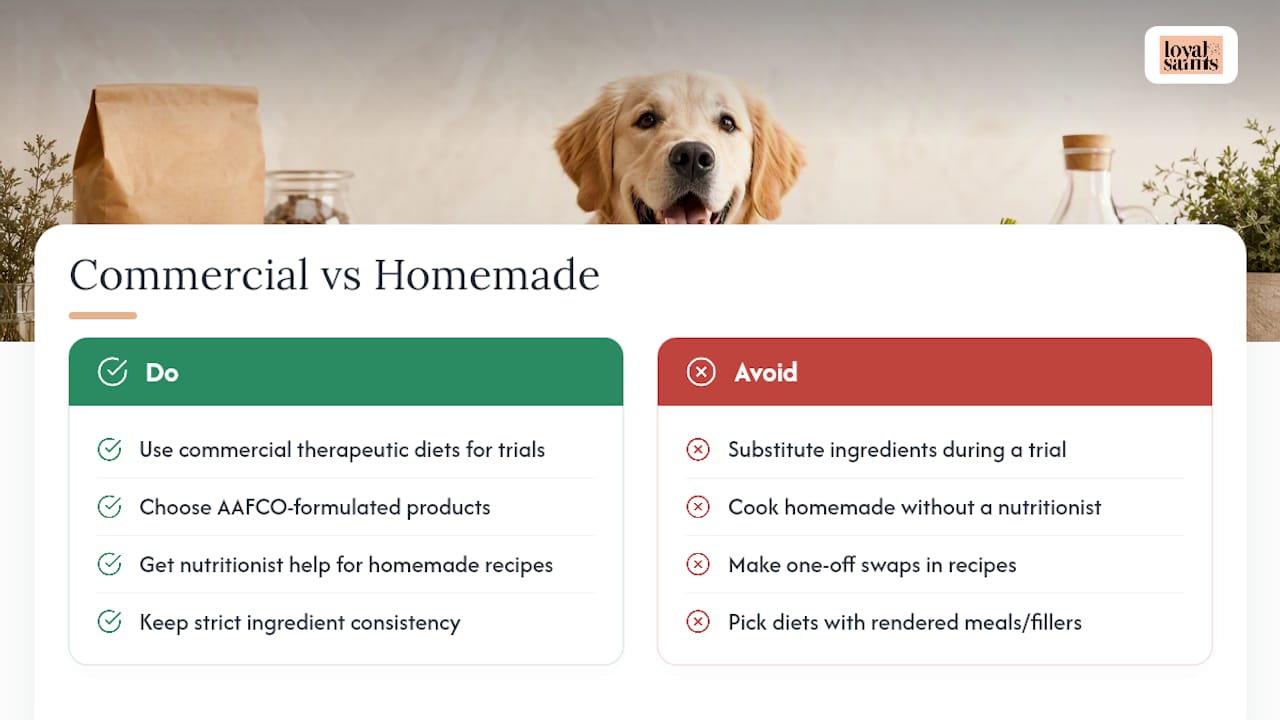
Commercial therapeutic diets, whether hydrolyzed or novel protein, are formulated to meet complete and balanced nutritional standards, which matters more than most owners realize during a months-long trial.
Homemade elimination diets exist and can work, but they require serious commitment. A single-protein, single-carbohydrate homemade recipe needs guidance from a board-certified veterinary nutritionist to avoid nutrient gaps that show up only after weeks or months of feeding. Home cooking also demands total consistency: no substituting ingredients, no “just this once” swaps, and precise recipe adherence every single meal.
Commercial hydrolyzed and novel protein options remove most of that risk. They’re formulated to AAFCO nutrient profiles, manufactured under consistent quality controls, and don’t require you to source and weigh raw ingredients every day for three months straight. For most owners, especially first-time trial runners, a commercial diet is the more forgiving and diagnostically reliable choice.
Where commercial diets vary widely is in ingredient quality and manufacturing practices. Human-grade, whole-ingredient formulas tend to have more transparent sourcing than diets built around rendered meals and fillers. That transparency matters most after diagnosis, during long-term maintenance, when palatability and ingredient trust become daily concerns rather than diagnostic ones. Our dog food allergy management guide covers what to look for on a label once you’re past the diagnostic phase.
Why Does Cost Vary So Much Between These Diets?
Sticker shock is real with both hydrolyzed and novel protein diets, and the reasons behind the price tag are worth understanding before you commit to a 6 to 12 week trial.
Prescription hydrolyzed diets typically cost more than standard commercial dog food because the hydrolysis manufacturing process is more involved and the diets require veterinary authorization to purchase. That prescription requirement itself adds a layer of cost and inconvenience, since you can’t just grab a bag off a shelf. Novel protein diets vary more widely. A prescription novel-protein formula sits in a similar price bracket to hydrolyzed diets, while OTC novel-protein bags can be cheaper, though that lower price comes with the contamination risk already discussed.
Availability affects cost too. Less common proteins, kangaroo, rabbit, venison, often carry higher prices simply because they’re harder to source than chicken or beef. Freeze-dried raw formats add another cost layer versus kibble, reflecting the ingredient quality and processing method, but many owners find the improved palatability worth it, especially with a dog reluctant to eat a therapeutic diet during a long trial.
Budget for the full trial window up front rather than month to month. A 6 to 12 week commitment that gets cut short at week four to save money often means starting over later at greater total cost, plus more weeks of an itchy, uncomfortable dog.
What Loyal Saints Pets Brings to This Conversation
Loyal Saints Pets built its freeze-dried lineup around human-grade, whole-ingredient nutrition, with single and limited-protein formulas designed for dogs managing allergies and sensitivities. That focus comes directly from watching how many dog owners struggle to find a maintenance diet that’s both diagnostically clean and something their dog actually wants to eat.
The products emphasize freeze-dried freshness with no fillers or synthetic additives, formulated to meet AAFCO complete and balanced standards. Every formula is built with the same principle veterinary dermatologists apply to elimination trials: fewer ingredients, clearer sourcing, and no guessing about what’s actually in the bag. That approach doesn’t replace a veterinarian’s diagnostic trial, but it does inform what a sustainable maintenance diet should look like once a diagnosis is confirmed.
— Kristina
Feeding After Diagnosis: Where Loyal Saints Pets Fits
Once your veterinarian confirms which protein your dog can safely eat, the challenge shifts from diagnosis to daily life, and that’s where a palatable, human-grade maintenance diet earns its keep. Loyal Saints Pets is built around exactly that stage: single and limited-protein freeze-dried formulas made with whole ingredients, without the fillers or mystery meals that complicate long-term feeding.

The Freeze Dried Raw Turkey with Salmon in the 5oz size works well for smaller dogs or as a trial-size introduction to see how your dog takes to the formula. Larger households or dogs with bigger appetites often do better with the 14oz Turkey with Salmon bag, which stretches further without sacrificing the same ingredient quality. If your veterinarian has cleared your dog to rotate between a few known-safe proteins, the Variety Pack featuring Beef, Chicken, and Turkey with Salmon lets you test acceptance across formulas without committing to a full-size bag of each.
For owners managing a long trial or ongoing maintenance feeding, consistency matters as much as ingredients. The Halo Club membership offers recurring delivery through either an annual or monthly membership, so you’re never scrambling for the next bag mid-trial. Confirm any diet change with your veterinarian first, then head to Loyal Saints Pets to find the formula that fits your dog’s confirmed needs.
Sources
The clinical guidance behind this article comes from veterinary hospital nutrition services and peer-reviewed trial data, not marketing copy. Bring the NCSU hydrolyzed diets overview, the Frontiers in Veterinary Science trial results, and the Tufts Petfoodology elimination trial guide to your appointment to ground the conversation in the same evidence your veterinarian trusts.
This article is general information, not a substitute for advice from a qualified doctor. Consult a qualified healthcare professional about your own circumstances before acting on anything here.
- Think your pet has a food allergy? Eliminating mistakes in elimination diet trials (Tufts Petfoodology)
- Hydrolyzed diets (NCSU Veterinary Hospital)
- Evaluation of hydrolyzed salmon and hydrolyzed poultry feather diets in restrictive diet trials for diagnosis of food allergies in pruritic dogs (Frontiers in Veterinary Science)
- Novel Protein Dog Food: How to Pick a Truly New Protein (DrFossums)
- Hydrolyzed protein and amino‑acid–based diets (Today’s Veterinary Practice)
FAQ
How Long Does a Novel Protein or Hydrolyzed Trial Take?
Both diet types require a 6 to 12 week elimination trial for a reliable diagnosis. Cutting it short, even by a few weeks, risks a false negative since some dogs need several weeks to show improvement.
Is Hydrolyzed Dog Food Better Than Novel Protein?
Neither is universally better. Hydrolyzed diets work well when diet history is unclear because they rely on chemistry, not exposure, while novel protein trials work best with a documented history and a genuinely unexposed protein.
Can I Buy a Hydrolyzed Diet Without a Prescription?
Most hydrolyzed diets require veterinary authorization because they’re formulated as therapeutic diets rather than standard commercial food. This prescription requirement also helps ensure manufacturing quality control during a diagnostic trial.
Why Did My Dog’s Novel Protein Diet Fail?
The most common causes are undeclared ingredients in over-the-counter formulas, prior undocumented exposure to that protein, or a hidden protein source like a flavored medication or treat. Lab testing has found undeclared proteins in a number of OTC novel diets.
Does Loyal Saints Pets Sell Diets for Elimination Trials?
Loyal Saints Pets makes single and limited-protein freeze-dried formulas like Turkey with Salmon, best suited for maintenance feeding after your veterinarian confirms a safe protein rather than for the initial diagnostic trial itself.


